
Bwindi Impenetrable National Park lies in south-western Uganda on the eastern edge of the Albertine Rift Valley, near the town of Kabale. Covering approximately 321 km², the park ranges in elevation from 1,160 to 2,607 metres above sea level. It was gazetted as a forest reserve in 1942, became a national park in 1992, and earned UNESCO World Heritage Site status in 1994 in recognition of its exceptional biodiversity and global conservation importance.
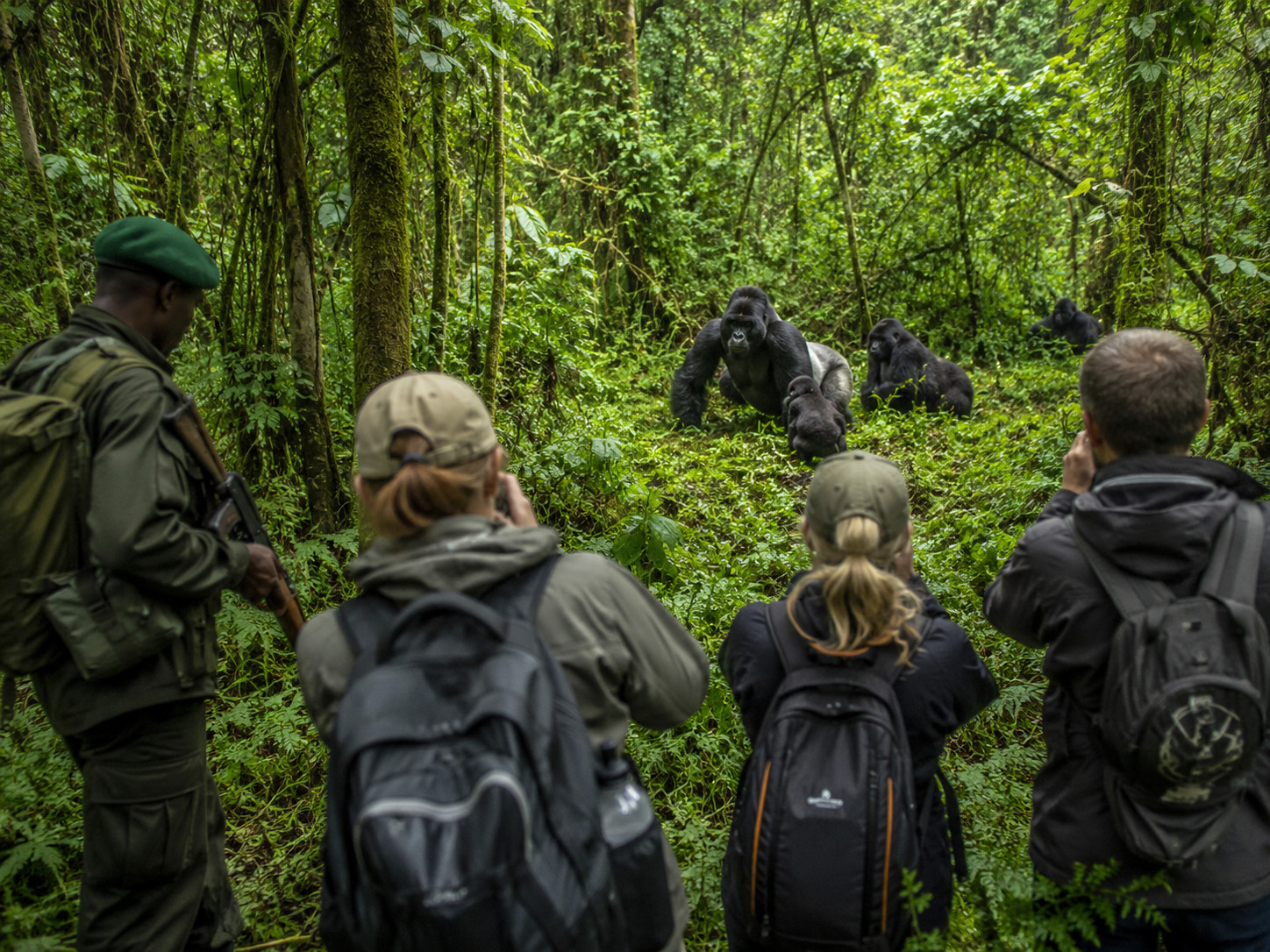
One of Africa’s oldest surviving rainforests, Bwindi is a landscape of steep valleys, rugged ridges, dense vegetation, bamboo stands and winding forest trails that have earned it the name “Impenetrable Forest.” The park protects one of the world’s most important habitats for the endangered mountain gorilla, with almost half of the global population living within the greater Bwindi ecosystem. Gorilla trekking is the park’s signature experience, taking visitors deep into the rainforest alongside experienced ranger guides in search of habituated gorilla families. The journey through the forest is as memorable as the encounter itself, offering an authentic wilderness experience unlike anywhere else in East Africa.
While mountain gorillas are the main attraction, Bwindi’s biodiversity extends far beyond its famous primates. The forest supports around 90 mammal species, including 11 species of primates such as black-and-white colobus monkeys, L’Hoest’s monkeys and blue monkeys. It is also home to forest elephants, chimpanzees, hundreds of butterfly species, more than 160 tree species, over 100 fern species, and more than 400 bird species, making it one of Africa’s premier destinations for birdwatching and nature enthusiasts.
The forest is also deeply connected to the communities that surround it. The Batwa, the forest’s original inhabitants, together with the Bakiga and Bafumbira, have longstanding cultural ties to the landscape. Community visits offer travellers an opportunity to learn about traditional ways of life, local conservation efforts and the relationship between people and the forest.
Thanks to its high altitude and dense forest canopy, Bwindi enjoys a cool mountain climate throughout the year. Early mornings and evenings can be surprisingly chilly, with June and July generally experiencing the coolest temperatures. Rain is possible at any time, although March to May and September to November are typically the wettest periods. Visitors should come prepared with warm clothing, waterproof layers, long trekking trousers and sturdy hiking boots, as the steep, often muddy trails are all part of the adventure that makes Bwindi one of Africa’s most rewarding rainforest destinations
Things to Do in Bwindi Impenetrable National Park
Gorilla Trekking in Bwindi Impenetrable National Park
Gorilla trekking is the signature experience in Bwindi Impenetrable National Park and the main reason travellers visit this remarkable rainforest. The park is home to almost half of the world’s remaining mountain gorillas, with trekking conducted in 4 sectors: Buhoma, Ruhija, Nkuringo, and Rushaga. Each sector has its own habituated gorilla families, making it important to choose accommodation close to the sector stated on your gorilla permit.
A Uganda gorilla trekking permit costs USD 800 per person and must be booked well in advance, especially during the peak travel seasons. Each habituated gorilla family is visited by a maximum of 8 trekkers per day, and participants must be at least 15 years old. Before setting off, Uganda Wildlife Authority ranger guides conduct a briefing covering safety procedures, gorilla trekking etiquette and what to expect in the forest.
Trekkers are expected to keep a minimum distance of about 7 metres from the gorillas, avoid using flash photography and remain calm and quiet throughout the encounter to minimise disturbance to the animals. Once the gorillas are located, you are allowed 1 unforgettable hour in their presence, observing their natural behaviour and taking photographs.
The trek itself can last anywhere from 2 to 8 hours, depending on the location of the gorilla family and the terrain on the day. Wearing long-sleeved clothing, sturdy hiking boots and waterproof gear is highly recommended, as the forest trails are often steep, muddy and slippery. Carry enough drinking water, a packed lunch and snacks, and consider hiring a porter to help with your backpack and provide support on challenging sections of the trail. Besides making the hike easier, hiring a porter directly supports local communities living around the park.
Gorilla Habituation Experience in Bwindi Impenetrable National Park
For travellers seeking a more immersive encounter with mountain gorillas, Bwindi Impenetrable National Park offers the Gorilla Habituation Experience. Unlike the standard gorilla trek, which allows 1 hour with a habituated gorilla family, this experience gives visitors up to 4 hours with a semi-habituated group alongside researchers, trackers and Uganda Wildlife Authority ranger guides.
The experience provides a rare opportunity to observe the gorillas as they move through the forest, feed, interact and gradually become accustomed to human presence. Because the gorillas are still undergoing habituation, every outing is different, offering a deeper insight into their behaviour and the conservation work involved in preparing them for future trekking.
The Gorilla Habituation Experience is currently offered in the Rushaga sector, where the Bushaho and Bikingi gorilla groups are among those undergoing habituation. A gorilla habituation permit costs USD 1,800 per person and should be booked well in advance due to the limited number of permits available each day.
Habituating a mountain gorilla family is a gradual process that typically takes about 2 years before the group is considered comfortable with human presence and can be opened for regular gorilla trekking. For wildlife enthusiasts, photographers and travellers wanting more time to observe gorilla behaviour, the Gorilla Habituation Experience is one of the most rewarding wildlife encounters available in Uganda.
Bwindi Gorilla Families and Trekking Sectors
Bwindi Impenetrable National Park is divided into four gorilla trekking sectors: Buhoma, Ruhija, Rushaga and Nkuringo. Each sector is home to several habituated gorilla families and operates independently, making the trekking sector on your permit an important factor when planning your safari.
The Buhoma sector is home to the Mubare, Habinyanja, Rushegura and Katwe gorilla families. In Rushaga, visitors can trek groups such as Nshongi, Mishaya, Busingye, Kahungye and Bweza. The Ruhija sector features the Bitukura, Oruzogo and Kyaguriro families, while Nkuringo is known for the Nkuringo and Christmas gorilla families.
Choosing accommodation close to your allocated trekking sector is essential for a smooth safari experience. For example, a permit for Rushaga is best paired with a lodge in or near the Rushaga area rather than one in Buhoma, as the drive between sectors can be long and challenging. Matching your lodge to your permit location reduces travel time on trekking day and allows for a more relaxed start to the experience.
Bird Watching in Bwindi Impenetrable National Park
Bwindi is one of Africa’s finest birdwatching destinations and a must-visit for birding enthusiasts. The forest is home to around 350 bird species, including 23 Albertine Rift endemics, with 14 species found only in Uganda, making it one of the country’s most important birding hotspots. Guided birding walks follow a network of forest trails that pass through dense rainforest, river valleys and waterfall areas, where experienced local guides help visitors locate some of the park’s most sought-after species. Among the highlights are the African green broadbill, Kivu ground thrush, short-tailed warbler, collared apalis, chestnut-throated apalis, western green tinkerbird, montane oriole, white-tailed flycatcher, fine-banded woodpecker, shining blue kingfisher, and the common bulbul. Whether combined with gorilla trekking or enjoyed as a dedicated birding excursion, Bwindi offers exceptional opportunities to discover the remarkable avian diversity of Uganda’s ancient rainforest.
Nature Walks and Waterfall Trails in Bwindi
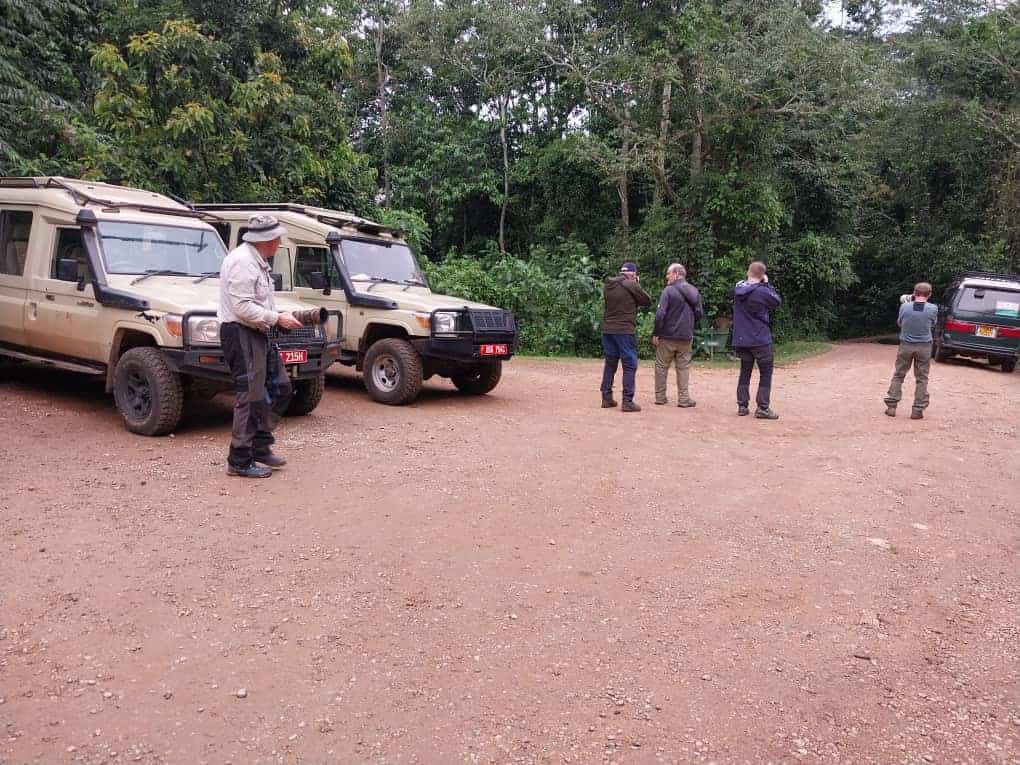
Bwindi Forest offers a network of guided forest trails for travellers who want to experience the rainforest beyond gorilla trekking. Every walk is led by an armed ranger guide, who provides interpretation of the forest’s ecology while ensuring visitor safety in an environment shared with wildlife.
Among the park’s most rewarding hikes is the Buhoma–Nkuringo Trail, a full-day trek of about 5 hours that crosses the forest between 2 of Bwindi’s main trekking sectors. The Rushura Hill Walk rewards hikers with panoramic views across Bwindi Forest and into the Democratic Republic of Congo, while the Munyanga River Trail is ideal for spotting primates, birds and the rich vegetation that characterises this ancient rainforest.
For visitors looking for shorter walks, the Waterfall Trail leads through dense forest to 3 scenic waterfalls, offering excellent opportunities for photography and birdwatching. Those seeking a more challenging hike can choose the 14-kilometre Ivi River Walk, which takes around 7 hours and passes through some of Bwindi’s most remote forest habitats. The Muzubijiro Loop Trail, approximately 6 kilometres long, combines excellent birdwatching and primate sightings with spectacular views of Bwindi Forest, the Western Rift Valley and the Virunga Volcanoes. Another fascinating route is the Bamboo Trail, which passes through 14 distinct vegetation zones, highlighting the remarkable plant diversity that makes Bwindi a UNESCO World Heritage Site.
Hiking and Cycling in the Kigezi Highlands
Beyond the park boundaries, the rolling hills of the Kigezi Highlands provide excellent opportunities for hiking and cycling. The region’s winding roads, terraced hillsides and forest-edge villages offer a different perspective of southwestern Uganda, allowing visitors to experience the landscape and rural communities at a slower pace. Several lodges around Bwindi offer bicycle hire or can arrange guided cycling excursions along community trails. One popular route follows the Ivi River from the Buhoma area, passing through villages, farmland and scenic viewpoints. These rides are ideal for travellers looking to add an active outdoor experience to their Bwindi itinerary while enjoying the region’s spectacular mountain scenery.
Community Walks and Cultural Experiences Around Bwindi
A visit to Bwindi is as much about its people as its wildlife. The communities surrounding the park have lived alongside the forest for generations, and cultural experiences provide valuable insight into their traditions, history and conservation efforts.
One of the most memorable experiences is the Batwa Cultural Experience, where Batwa guides share the story of their ancestral connection to the forest. Visitors learn about traditional hunting and gathering practices, medicinal plants, fire-making techniques and the way the Batwa once lived in harmony with the rainforest and its wildlife before the creation of the national park.
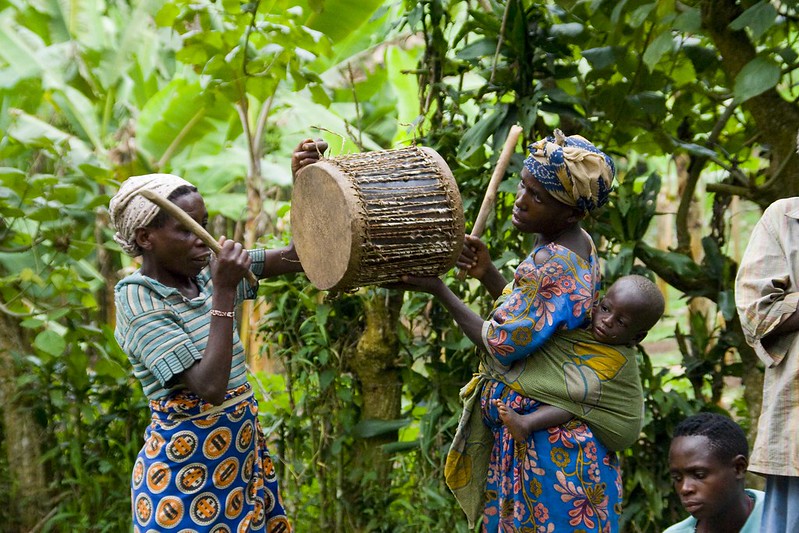
Other community experiences include the Buniga Forest Nature Walk in Nkuringo, the Nyundo Community Eco Trail and King Bakyara’s Waterfall Trail, each offering opportunities to explore local forests and villages. Around Buhoma, guided community walks often include visits to handicraft workshops, local schools, traditional healers and banana farms, where visitors can learn how bananas are transformed into juice, beer and locally distilled gin before sampling the finished products.
These cultural experiences complement Bwindi’s wildlife encounters by introducing visitors to the people who call this remarkable landscape home, creating a deeper understanding of the close relationship between conservation, community and sustainable tourism.
Best Time to Visit Bwindi Impenetrable National Park
Bwindi Impenetrable National Park can be visited in any month of the year, but your trekking experience changes with the seasons. The 2 main seasons to consider are the dry season and the wet season. Since Bwindi is a thick rainforest with steep, slippery valleys and high ridges, the weather affects trail conditions, photography, packing and how comfortable the walk feels under the forest canopy.
Dry Season in Bwindi (June to September and December to February)
The dry season is generally the most comfortable time for gorilla trekking in Bwindi Impenetrable National Park. The main dry periods run from June to September and December to February, offering some of the best conditions for travellers planning to explore the forest on foot.
During these months, the trekking trails are firmer, with less mud and fewer slippery sections, making the hike more manageable, especially on Bwindi’s steep forest paths. The improved conditions also make it easier to walk through dense vegetation, handle photography equipment and enjoy longer periods in the forest with a lower chance of heavy rainfall during the gorilla encounter.
The dry season is ideal for travellers who prioritise easier trekking conditions, clearer travel planning and a more comfortable overall experience. However, Bwindi remains a rainforest, so rain showers are still possible at any time. The drier months can also bring hazier conditions, meaning distant mountain and valley views may not always be as sharp as they appear after rainfall.
For many visitors, the combination of more accessible trails, better hiking conditions and reliable travel conditions makes the dry season one of the most popular times to experience Bwindi’s mountain gorillas.
Wet Season in Bwindi (March to May and October to November)
The wet season in Bwindi Impenetrable National Park occurs from March to May and from October to November. Gorilla trekking continues throughout these months, and while the forest becomes wetter and the trails more challenging, this period also reveals a different side of Bwindi’s rainforest beauty.
Rainfall brings out the richness of the forest, with greener vegetation, fresh mountain air, active birdlife and a quieter atmosphere along the trails. The cooler conditions can make the trek more comfortable in some sections, although the terrain becomes more slippery and physically demanding.
Visitors trekking during the wet season should come prepared with sturdy waterproof hiking boots, long trekking trousers, a rain jacket or poncho, and walking support if needed. A waterproof bag cover is also useful for protecting cameras and personal items from sudden showers.
The wet season is a good choice for travellers who prefer fewer crowds and do not mind a slower-paced forest adventure. With the right preparation and enough flexibility in the itinerary, gorilla trekking during these months can be a rewarding experience, offering a more intimate connection with Bwindi’s lush rainforest environment.
Where to Stay in Bwindi Impenetrable National Park
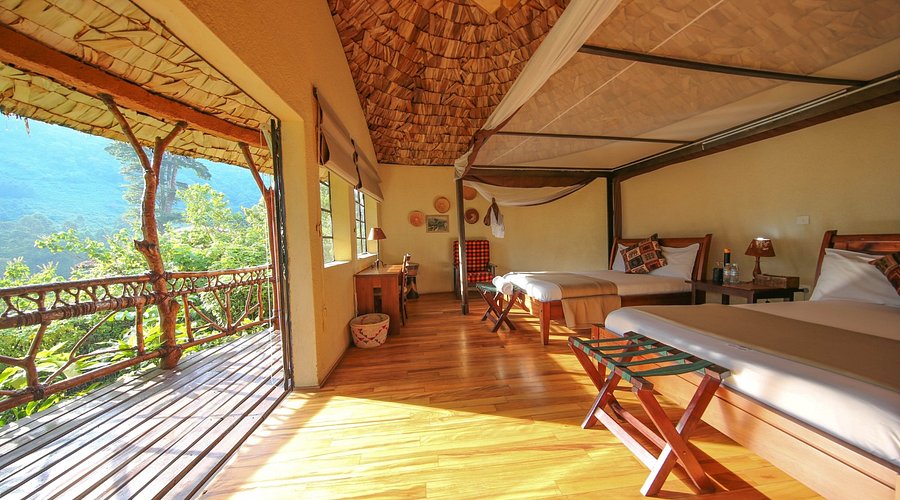
Your Bwindi accommodation should match the gorilla trekking sector written on your permit. Bwindi has four main trekking sectors, Buhoma, Rushaga, Nkuringo and Ruhija, and the roads between them can take time because of the hills, forest edges and winding murram routes. A lodge in Buhoma is best for Buhoma permits, Rushaga lodges work best for Rushaga and Nshongi family treks, Nkuringo lodges suit Nkuringo permits, and Ruhija lodges are better for Ruhija trekking families. This keeps your morning transfer shorter and helps you reach the briefing point on time.
Best Lodges in Buhoma Sector
- Buhoma Lodge, Luxury
- Mahogany Springs in Bwindi, Luxury
- Volcanoes Bwindi Lodge, Luxury
- Trackers Safari Lodge, Luxury
- Sanctuary Gorilla Forest Camp, Luxury
- The Crested Crane Bwindi Hotel, Luxury
- Bwindi Silverback Lodge, Luxury
- Bwindi Engagi Lodge, Mid-range
- Buhoma Community Haven Lodge, Mid-range
- Buhoma Community Rest Camp, Budget
- Buhoma Community Bandas
- Bwindi View Bandas
- Lake Kitandara Camp
Best Lodges in Rushaga Sector
- Rushaga Gorilla Camp, Luxury
- Gorilla Safari Lodge, Luxury
- Ichumbi Lodge in Bwindi, Luxury
- Bwindi Gorilla Valley Lodge, Mid-range
- Rushaga Gorilla Haven Lodge, Mid-range
Best Lodges in Nkuringo Sector
- Nkuringo Bwindi Gorilla Lodge, Luxury
- Clouds Mountain Gorilla Lodge, Luxury
- Chameleon Hill Lodge, Luxury
- Mutanda Lake Resort, Luxury
- Nkuringo Campsite
- Trekkers Tavern Cottages
- Wagtail Eco Lodge
Best Lodges and Camps in Ruhija Sector
- Ruhija Gorilla Safari Lodge, Mid-range
- Agandi Lodge, Mid-range
- Ruhija Gorilla Mist Camp, Mid-range
- Bwindi Bakiga Lodge, Mid-range
- Trekkers Tavern, Budget
Accommodation for Nkuringo and Nshongi Gorilla Families
- Gahinga Volcanoes Lodge
- Gorilla Safari Lodge
- Traveler’s Rest Camp