
Mgahinga Gorilla National Park in Kisoro, Uganda
Mgahinga Gorilla National Park is Uganda’s smallest national park, covering 33.7 km² in Bufumbira County, Kisoro District, in the country’s far southwestern corner where Uganda meets Rwanda and the Democratic Republic of Congo. The park occupies the Ugandan slopes of 3 extinct Virunga volcanoes, Mount Sabyinyo (3,645 m), Mount Gahinga (3,474 m), and Mount Muhabura (4,127 m), creating a dramatic landscape of volcanic peaks, montane forests and bamboo-covered slopes.
Gazetted on 9 May 1991, Mgahinga forms part of the 434 km² Virunga Conservation Area, a transboundary protected ecosystem shared with Volcanoes National Park in Rwanda and Virunga National Park in the Democratic Republic of Congo. The park lies approximately 14 km from Kisoro Town, while the journey from Kampala covers about 510 km via Kabale and Kisoro.
Despite its compact size, Mgahinga offers one of Uganda’s most rewarding combinations of wildlife, scenery and cultural experiences. It is the country’s only destination where visitors can combine gorilla trekking, golden monkey tracking, Virunga volcano hiking, birdwatching, guided nature walks and Batwa cultural experiences within a single protected area.
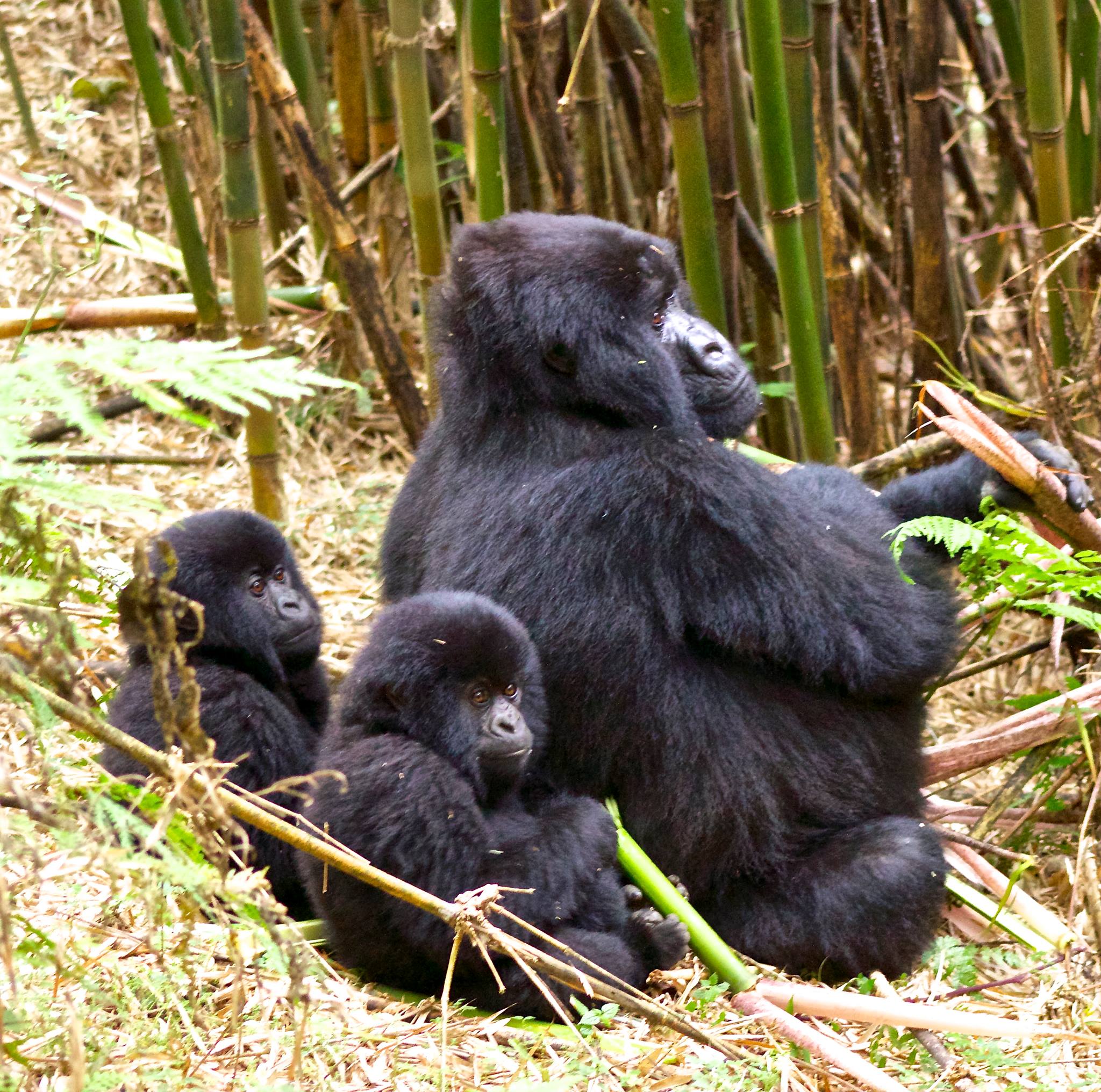
The park is home to one habituated mountain gorilla family and the endangered golden monkey, alongside a variety of other wildlife including elephants, buffaloes, bushbucks, duikers, giant forest hogs, bushpigs, side-striped jackals, African golden cats and porcupines. More than 180 bird species have been recorded, including 14 Albertine Rift endemics such as the Rwenzori Turaco, Rwenzori Batis, Dusky Crimsonwing and Regal Sunbird, making Mgahinga an excellent destination for birdwatchers.
For travellers deciding between Bwindi Impenetrable National Park, Volcanoes National Park in Rwanda and Mgahinga, this park offers a quieter and less crowded experience without compromising on adventure. Its volcanic scenery, exceptional primate encounters, rich Batwa heritage, scenic hiking trails and spectacular mountain views make it one of Uganda’s most distinctive safari destinations.
Things to Do in Mgahinga Gorilla National Park
Although Mgahinga Gorilla National Park is Uganda’s smallest national park, it offers some of the country’s most rewarding wildlife and mountain experiences. From gorilla trekking and golden monkey tracking to volcano hiking, birdwatching and Batwa cultural encounters, the park combines exceptional biodiversity with dramatic scenery in the heart of the Virunga Mountains
Gorilla Trekking in Mgahinga Gorilla National Park
Gorilla trekking is the park’s flagship experience and the main reason most visitors come to Mgahinga. Every trek begins with a briefing by Uganda Wildlife Authority ranger guides before entering the mountain forest in search of the gorillas. Treks usually start in the morning. The trek can last between 2 and 8 hours, depending on where the gorillas are feeding or resting on the day.
Mgahinga is home to the Nyakagezi Gorilla Family, the park’s only habituated gorilla group. The family is well known for its stable social structure and multiple silverbacks, making it one of Uganda’s most fascinating groups to visit. After spending several years ranging across the Rwanda border, the Nyakagezi family has remained largely within Uganda since 2012. Should the group move into Rwanda after permits have been issued, the Uganda Wildlife Authority will either transfer visitors to Bwindi Impenetrable National Park or arrange a permit refund.
Only 8 visitors are allowed to trek each gorilla family per day, and all participants must be 15 years or older. Once the gorillas are located, visitors spend one unforgettable hour observing them in their natural habitat. During the encounter, you should remain at least 7 metres away, avoid flash photography and follow all instructions given by the ranger guides.
Golden Monkey Tracking
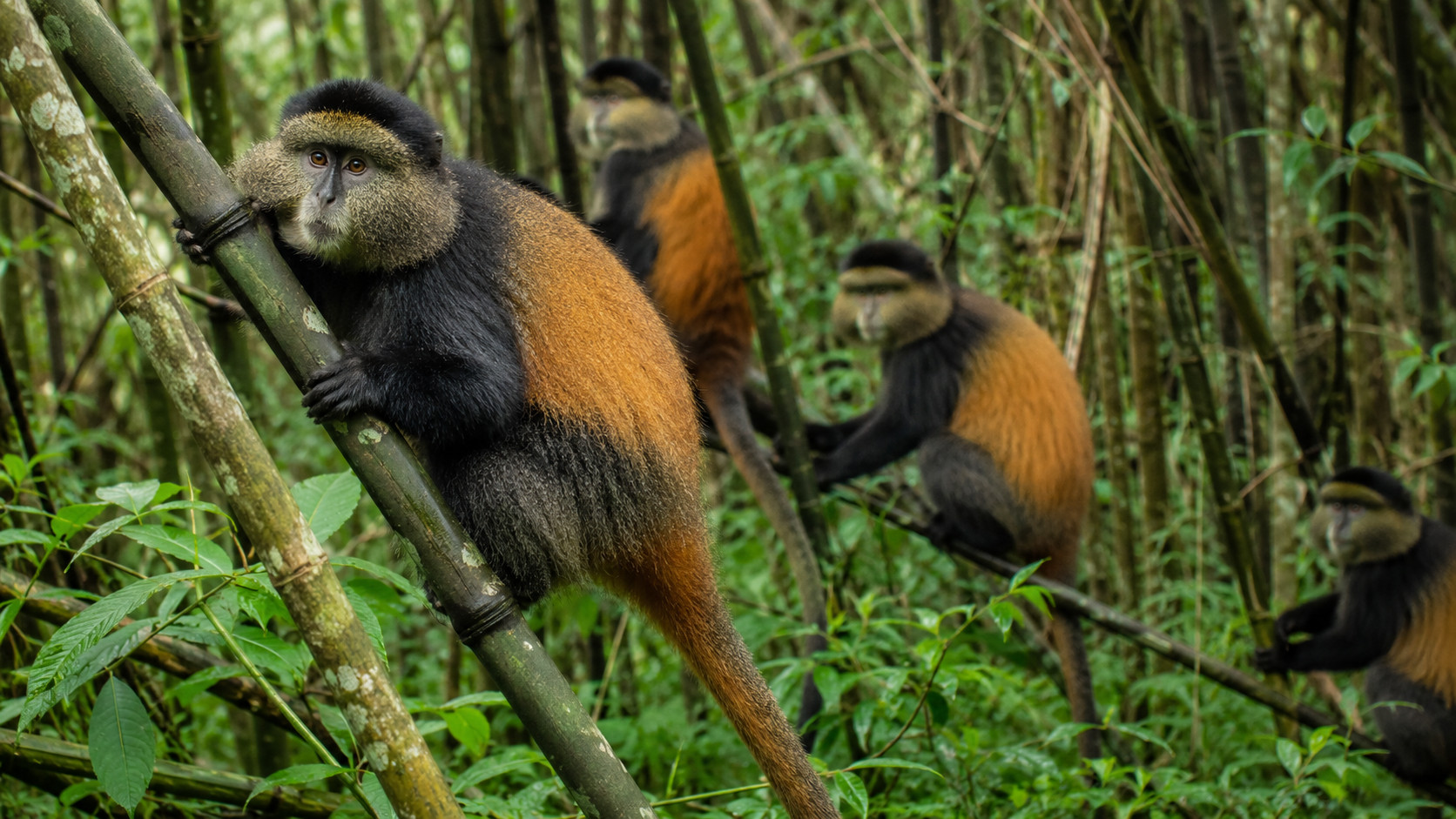
Golden monkey tracking is one of Mgahinga’s most distinctive wildlife experiences. These endangered primates live in the park’s bamboo forests and are easily recognised by their striking golden-orange fur, black limbs and energetic behaviour.
The trek usually lasts 2 to 4 hours, following forest trails through the bamboo zone where the monkeys feed on young bamboo shoots and other vegetation. Once found, visitors watch them leap through the canopy, forage and interact with one another, creating excellent opportunities for wildlife photography.
Golden monkeys are typically found at elevations above 2,500 metres, making the walk moderately challenging but generally less demanding than gorilla trekking. Visitors should wear sturdy hiking boots, long-sleeved clothing and gloves, and carry a rain jacket, camera and binoculars.
Mgahinga offers both the standard Golden Monkey Tracking Experience, which includes one hour with the monkeys, and the Golden Monkey Habituation Experience, allowing visitors to spend extended time alongside researchers and ranger guides
Volcano Hiking
Mgahinga protects the Ugandan slopes of three spectacular Virunga volcanoes: Mount Gahinga, Mount Sabyinyo and Mount Muhavura. Guided hikes depart daily and range from full-day adventures to demanding summit climbs, rewarding hikers with panoramic views across Uganda, Rwanda and the Democratic Republic of Congo.
Mount Gahinga
Meaning “pile of stones,” Mount Gahinga offers the shortest of the three volcano hikes. The trail climbs approximately 1,100 metres through bamboo forest and montane vegetation before reaching the summit, making it an excellent choice for hikers seeking a rewarding but less strenuous climb.
Mount Sabyinyo
Known as “Old Man’s Teeth,” Mount Sabyinyo is famous for its rugged peaks and dramatic terrain. The round-trip hike takes about 8 hours and includes ladders and steep rock sections near the summit. Standing at the top places you at the unique meeting point of Uganda, Rwanda and the Democratic Republic of Congo.
Mount Muhavura
At 4,127 metres, Mount Muhavura is the highest volcano in the park and the most demanding climb. The ascent gains approximately 1,793 metres through bamboo forest, heath and Afro-alpine vegetation before reaching spectacular summit views across the Virunga Mountains. Because of the altitude, hikers should pace themselves and remain alert for signs of altitude sickness.
Bird Watching
Despite its small size, Mgahinga is one of Uganda’s finest destinations for Albertine Rift endemic birds. More than 180 bird species live here, including several species found nowhere else in Uganda. Birdwatching can be enjoyed throughout the year along forest trails, the Gorge Trail and lower mountain slopes. Visitors hoping to spend a full day birding should carry binoculars, drinking water and a packed lunch. Species to look out for include the Rwenzori Turaco, Kivu Ground Thrush, Handsome Francolin, Archer’s Robin-chat, Cinnamon Bracken Warbler, Greater Double-collared Sunbird, Scarlet-tufted Sunbird and many other highland forest species.
Batwa Trail and Garama Cave
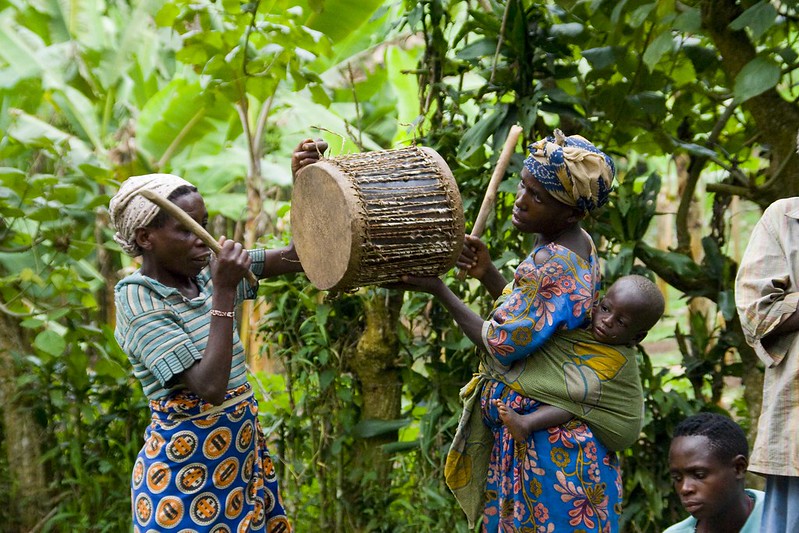
The Batwa Trail offers one of the most meaningful cultural experiences in southwestern Uganda. Before Mgahinga became a national park, the Batwa people lived in these forests as hunter-gatherers, relying on the mountain environment for food, medicine and shelter. Led by Batwa guides, the trail introduces visitors to traditional hunting techniques, medicinal plants, forest survival skills and the cultural history of the Virunga Mountains.
The experience also includes a visit to Garama Cave, where the Batwa once sought refuge and held community gatherings. Today, the trail provides valuable income for local Batwa communities while preserving their cultural heritage. Visitors are encouraged to tip guides and porters as a way of supporting community-led tourism initiatives
Best Time to Visit Mgahinga Gorilla National Park
Mgahinga Gorilla National Park is open throughout the year, but the best time to visit depends on the experience you are looking for. For gorilla trekking, golden monkey tracking and volcano hiking, the dry seasons from June to August and December to February offer the most favourable conditions. During these months, rainfall is lower, forest trails are firmer, and access roads are generally easier to navigate, making outdoor activities more comfortable. Although rain is possible at any time due to the park’s high-altitude location in the Virunga Mountains, July is typically the driest month, receiving around 10 mm of rainfall, while October is often the wettest, with rainfall reaching approximately 250 mm. Travellers should therefore be prepared for changing mountain weather regardless of the season.
Dry Season (June to August and December to February)
The dry season is the most popular time to visit Mgahinga Gorilla National Park. Gorilla trekking trails, volcano hiking routes and park access roads are generally in better condition, allowing for easier movement through the forest. These months also coincide with the peak tourism season, so gorilla trekking permits and accommodation should be booked several months in advance. Booking at least 6 months before travel is recommended, particularly if you plan to visit during July, August or the festive season.
One advantage of the dry season is the more comfortable trekking conditions, although gorilla treks can sometimes take longer. As food becomes less abundant on the lower slopes, gorilla families may move deeper into the forest in search of fresh vegetation. Visitors should come prepared with sturdy hiking boots, waterproof clothing, drinking water and a packed lunch for a full day on the trail.
Wet Season (March to May and September to November)
The rainy seasons generally occur from March to May and again from September to November. During these months, the park receives heavier rainfall, making forest trails steeper, muddier and more slippery. While trekking remains possible throughout the year, visitors should pack waterproof clothing, durable hiking boots and suitable trekking gear for the wetter conditions.
Despite the increased rainfall, the wet season has several advantages. Visitor numbers are lower, accommodation rates are often more competitive, and the forest is lush and vibrant. This is also an excellent time for birdwatching, as resident species are joined by seasonal migrants. For gorilla trekking, the abundance of food in the forest often keeps gorilla families closer to the lower slopes, which can result in shorter and less demanding hikes than during the dry season.
Where to Stay Near Mgahinga Gorilla National Park
Accommodation around Mgahinga Gorilla National Park caters to a wide range of travellers, from budget-friendly community camps and comfortable mid-range lodges to luxury retreats. Many properties are located close to the Ntebeko Gate, allowing guests to reach the park quickly for gorilla trekking, golden monkey tracking, Batwa cultural experiences and volcano hikes without a long early morning drive.
Travellers looking for a more scenic setting can also stay around Lake Mutanda or Lake Bunyonyi, both within a reasonable driving distance of the park. These lakeside locations offer peaceful surroundings, spectacular views and opportunities to relax before or after exploring Mgahinga.
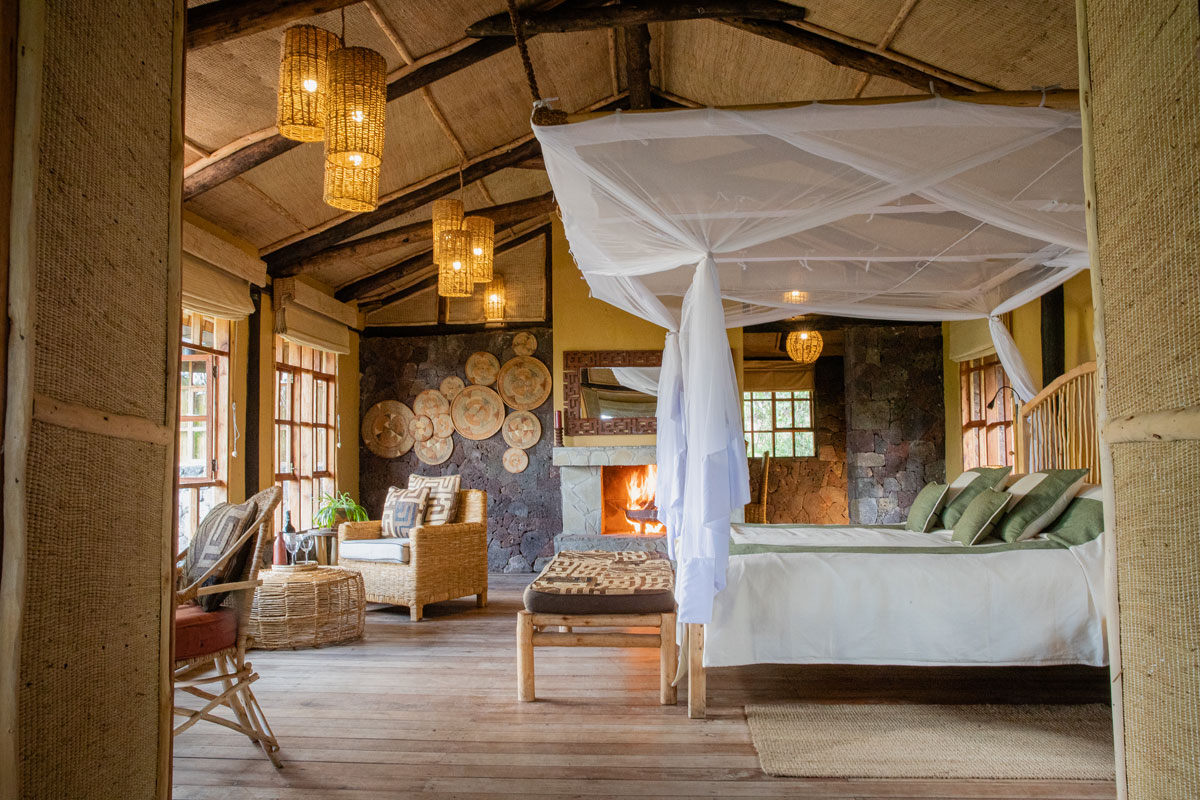
When choosing where to stay, consider your trekking sector, departure time, preferred level of comfort and the amount of driving you are willing to do. Staying close to the park entrance provides the greatest convenience for early morning activities, while the nearby lake areas offer a quieter retreat with some of the most beautiful scenery in southwestern Uganda.
Recommended Accommodation Around Mgahinga National Park
- Amajambere Iwacu Community Camp
A simple community-style option near Mgahinga, suitable for travellers who want a local base close to the park. It works well for guests focused on gorilla trekking, golden monkey tracking, Batwa experiences and volcano hiking without needing a luxury lodge setting. - Mgahinga Safari Lodge
A comfortable lodge option for travellers looking for a more settled stay near the park. It gives easier access to the Mgahinga activities while still keeping you close to the mountain scenery and the quiet highland atmosphere around Kisoro. - Mount Mgahinga Rest Camp
A modest rest camp option for travellers who want to stay near the park and keep the focus on the activities. It suits guests planning early starts for trekking, forest walks or hiking in the Virunga volcanoes. - Travelers’ Rest Camp
A good option for travellers staying around Kisoro before connecting to Mgahinga. It works well when the itinerary includes both Mgahinga and nearby areas such as Lake Mutanda, Bwindi or Lake Bunyonyi. - Mount Gahinga Lodge
The main luxury lodge option close to Mgahinga, located just a few hundred metres from the park gate. It has lovely gardens where wildlife can come close to the lodge, and it also supports the local Batwa community. Its community work includes a village, cultural centre, dance group and vocational training centre. - Lake Mutanda Lodges
Lake Mutanda is a good wider-area base for travellers who want beautiful lake scenery while still accessing Mgahinga. This works best when the itinerary has enough time for the transfer to the park in the morning. - Lake Bunyonyi Lodges
Lake Bunyonyi can also work as a wider base for Mgahinga, mainly for travellers combining the park with a relaxed lake stay. It is better suited to itineraries that allow enough time between lodge, park gate and planned activities.