
Golden Monkey Tracking in Rwanda
Golden monkey tracking in Rwanda is one of the most rewarding primate experiences in Volcanoes National Park. The trek takes you into the cool bamboo forests at the foot of the Virunga volcanoes. These small, fast-moving primates live in the high-altitude forest around Volcanoes National Park in northern Rwanda’s Musanze District.
Golden monkeys are a local subspecies of the Sykes monkey, also called the blue monkey. Their scientific name is Cercopithecus mitis kandti. Their golden-orange backs, bright cheeks, dark limbs, black tails, and dark crowns make them stand out beautifully against the green bamboo.
The Virunga Mountains stretch across Rwanda, Uganda, and the Democratic Republic of Congo. This mountain range holds the last strong population of golden monkeys. Rwanda and Uganda are the main countries where visitors can trek to see them at close range.
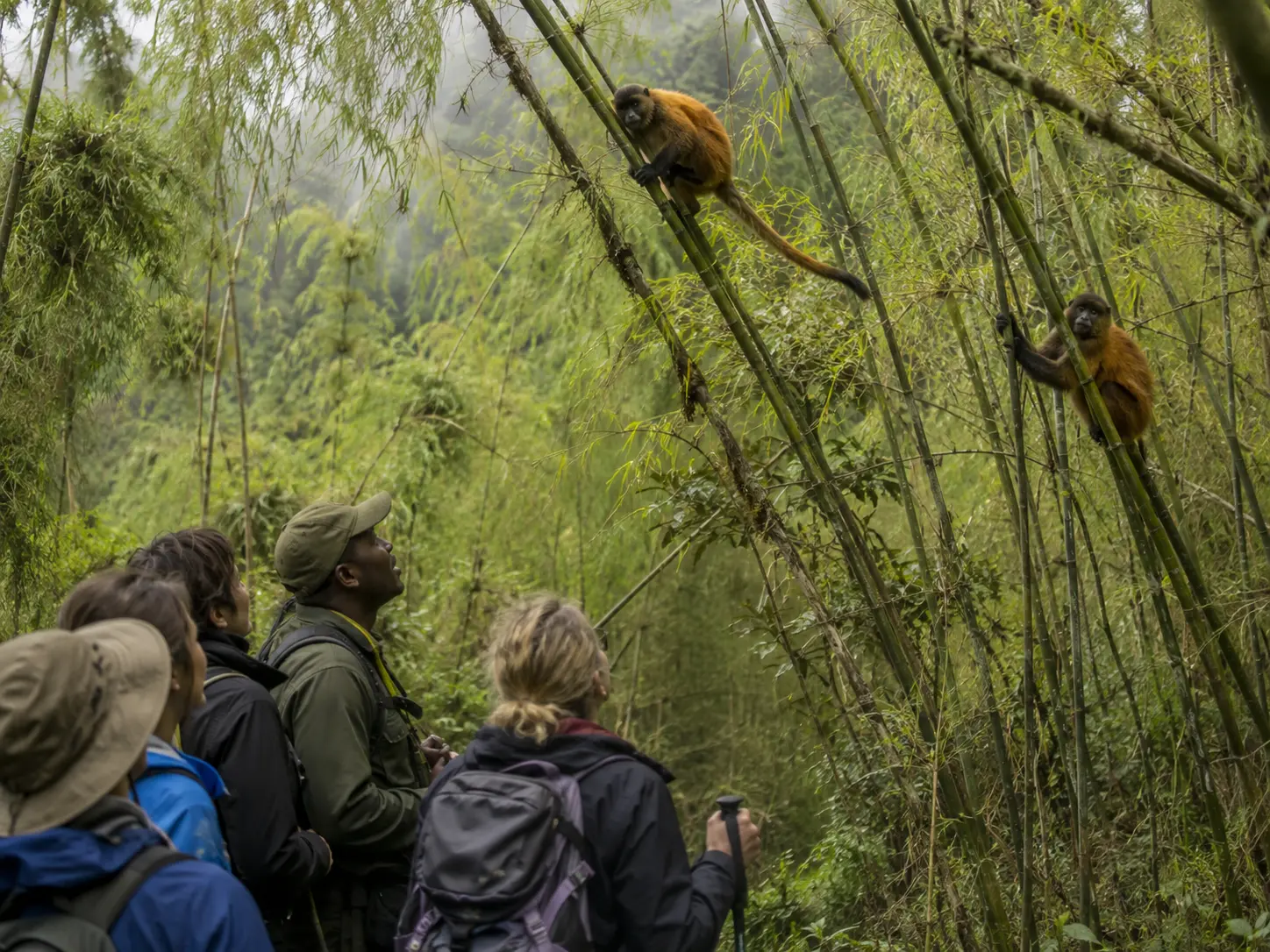
In Volcanoes National Park, visitors track habituated groups, including the Kabatwa group on the slopes of Mount Sabyinyo and the Musongo group higher on Mount Karisimbi. Some groups hold around 40 members, while the larger troops can reach about 80 to 100 individuals. Across their remaining range, around 5,000 golden monkeys are believed to survive. This makes every encounter feel rare, special, and important.
This trek is lighter than gorilla trekking because the monkeys spend much of their time in the bamboo zone on the lower mountain slopes. The terrain is flatter and easier to walk. Once you find them, you spend one hour watching them feed, leap, chase, tumble, and swing through the bamboo. They feed mainly on bamboo shoots, bamboo branchlets, young bamboo leaves, ripe fruits, and insects.
Their playful behaviour makes them excellent for photography. Smaller and quicker than gorillas, they keep you alert from the moment the troop appears. For travellers visiting Volcanoes National Park, golden monkey tracking works very well as a morning activity. It is also a strong addition after mountain gorilla trekking.
What Happens During Golden Monkey Tracking in Rwanda
Morning Briefing at Kinigi Park Headquarters
Golden monkey tracking starts early, so your morning needs to be calm and well organised. After breakfast, you head to Kinigi Park Headquarters. You should arrive before 7:00 AM for check-in, permit verification and the ranger briefing. This is where the park team explains how the trek works, how to behave around the monkeys, what to expect in the bamboo forest, and how your group will move once the trackers have found the troop.
The briefing also prepares you for the forest itself. You will be reminded to wear good walking boots, long-sleeved clothing and a waterproof jacket because Volcanoes National Park is a high-altitude rainforest. Even on a clear morning, rain can fall in the forest, and some sections of the path can become muddy.
Group allocation is also done here, with a maximum of 8 visitors per group. Porters are available at about $15 to $20 to carry a daypack or support you through slippery patches. This is useful even though golden monkey tracking is lighter than gorilla trekking.
Trekking Terrain and Difficulty in Volcanoes National Park
After the briefing, your ranger guide takes you towards the trailhead. This can be done by vehicle or on foot, depending on where the golden monkeys were last located. Trackers go ahead early in the morning and communicate with the guides once they find the troop. This means the walk is guided by fresh signs and real movement in the forest.
Golden monkey trekking is one of the easier primate walks in Volcanoes National Park. The monkeys live on the lower slopes of the mountain range, mainly in the bamboo zone. Because of this, the terrain is not as demanding as a mountain gorilla trek. A basic level of fitness is enough for most guests. The walk can take about 30 minutes to 1.5 hours before you reach the troop, depending on how far the monkeys have moved while feeding.
The route can pass through farmland before entering the bamboo forest. From there, it continues through thick vegetation at an elevation of roughly 2,400 to 3,200 metres. Some sections are flat and easy, while others can be muddy, narrow or slightly steep. As you get closer, your guide will ask you to slow down, listen carefully and watch for movement, calls and shaking bamboo stems. Golden monkeys move quickly, so this last part of the trek feels lively and exciting.
One Hour With the Golden Monkeys
Once the troop is found, you are allowed one hour with them. This is the best part of the experience. Unlike gorillas, which sit calmly for long periods, golden monkeys are active, fast, and playful. They leap between bamboo stems, chase each other through the canopy, feed on bamboo shoots, strip stems for pulp, groom, call, and move in several directions at once.
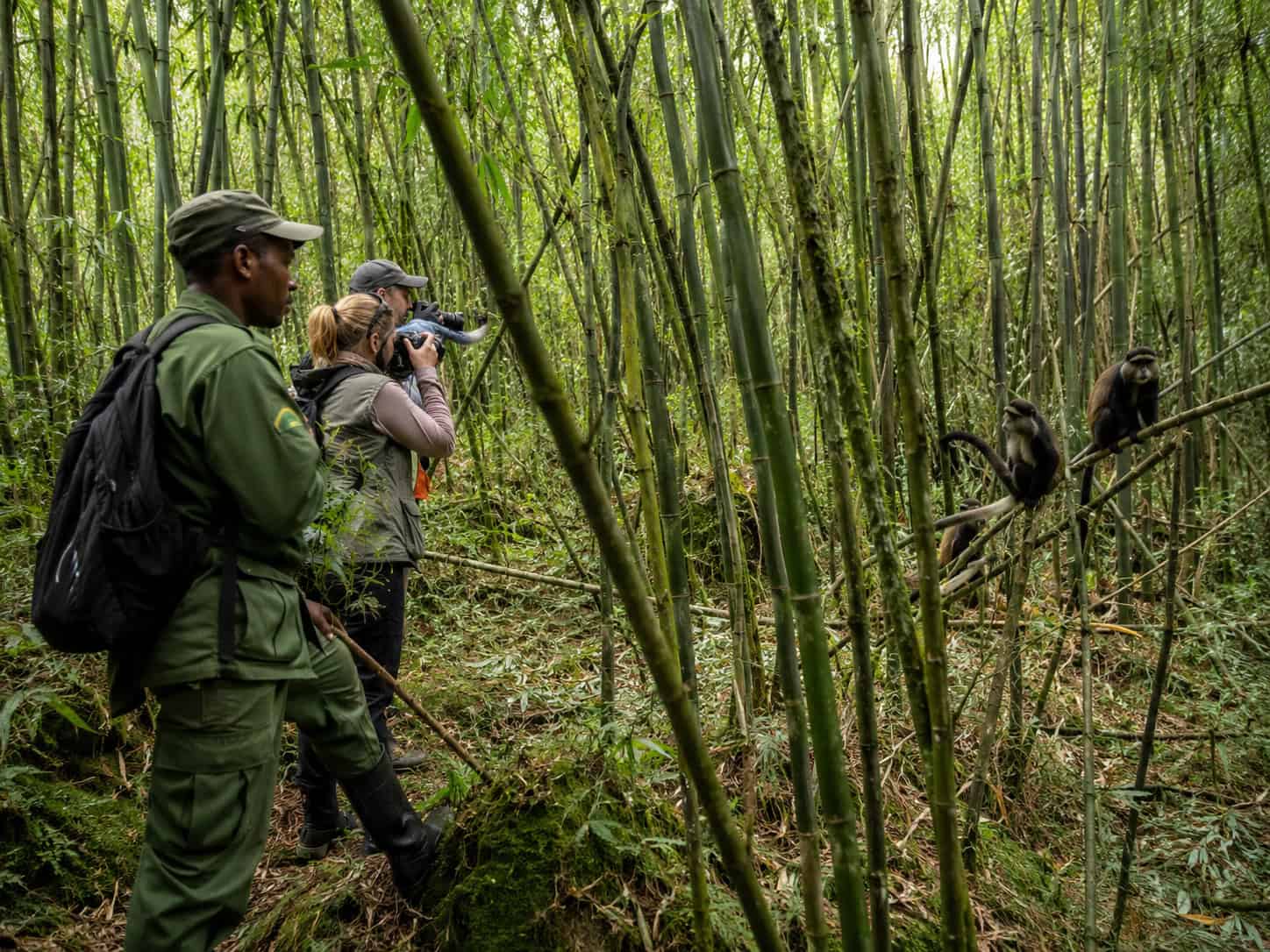
Your guide will position the group for clear viewing while keeping the required 4-metre distance from the monkeys. The troop can still come close as they move through the bamboo, but you follow the ranger’s instructions and give them space. During this hour, you can watch juveniles playing, adults feeding, mothers nursing infants, and males displaying within the group. Their calls include chirps, whistles, chatter, and alarm sounds. These sounds help you understand how active and social these primates are.
Photography is rewarding here, but you need to be ready. Golden monkeys have reddish-gold backs, dark limbs and quick movements. They look beautiful against the green bamboo, but they can be hard to capture sharply. Faster shutter speeds help because they rarely stay still for long. The hour passes quickly, so the best approach is to enjoy the behaviour first. Then take photos when the monkeys settle or feed near your group.
After the Golden Monkey Trek
After your hour in the forest, you trek back to the trailhead. The return walk takes about 30 to 60 minutes and is generally easier because much of it is downhill. You then return to the park headquarters for a short debriefing. You will receive a golden monkey tracking certificate, and there is time to look at local crafts before heading back to the lodge.
Golden monkey tracking is a half-day activity, generally running from about 8:00 AM to 12:00 PM. That makes it easy to combine with a relaxed afternoon in Musanze, a cultural visit, a lodge lunch, or a transfer to your next Rwanda safari stop.
Golden Monkey Permit and Trekking Rules in Rwanda
Golden Monkey Permit Booking
A golden monkey trekking permit in Rwanda gives you access to Volcanoes National Park for one guided golden monkey tracking experience. The standard permit cost for a foreign visitor is US$100 per person. This covers park entry, ranger guiding, tracking support, and one hour with a habituated golden monkey troop once the monkeys are found.
The experience also includes the official park process, from check-in and briefing to the tracking walk in the bamboo forest. Golden monkey permits are easier to secure than gorilla permits, but it is still better to book ahead if you are travelling on fixed dates.
For the busier months, mainly June to September, book about 1 to 2 months in advance. In quieter travel months, 1 month can be enough, though early booking still gives you cleaner planning around accommodation, transport, and other Volcanoes National Park activities.
To book your golden monkey permit, first confirm your preferred tracking date and provide your passport details. AA Safaris and Tours can help arrange the permit, handle the booking process, and coordinate the rest of your Rwanda safari around your trekking date. Once your permit is confirmed, keep the booking details ready for check-in at the park headquarters in Kinigi on the morning of your trek. The minimum age for golden monkey trekking in Rwanda is 12 years.
| Visitor Category | Adult Permit | Student / Child Permit |
|---|---|---|
| Foreigner | US$100 | Not indicated |
| Foreign resident in Rwanda | US$65 | US$45 |
| Rwandan citizen | RWF 4,000 | RWF 2,000 |
| East African citizen | US$65 | US$45 |
| East African foreign resident | US$80 | US$45 |
Best Time for Golden Monkey Tracking in Rwanda
Golden monkey tracking in Rwanda can be done throughout the year, but the experience changes with the seasons in Volcanoes National Park. The monkeys live mainly in the bamboo forest on the lower slopes of the Virunga volcanoes. This means weather, trail conditions, bamboo growth, visibility, and visitor numbers all shape the trek. If your main aim is easier walking and clearer photography, the drier months are the safer choice. If you want greener forest, fewer people, and a quieter feel, the rainy months can still be rewarding.
Dry Season Golden Monkey Tracking in Rwanda
The dry season runs mainly from June to September and December to February. These months give you the most comfortable overall conditions in Volcanoes National Park. The forest paths are drier, the bamboo zone has less mud, and the weather is more predictable. This helps first-time visitors settle into the trek without worrying too much about slippery ground.
This is also a strong season for photography. Clearer skies bring better light, and the monkeys are easier to follow when the vegetation is not too thick. Golden monkeys move quickly through the bamboo, so clean visibility matters. You stand a better chance of watching them leap between stems, feed on bamboo shoots, chase each other through the forest, and pause long enough for good photos.
The main point to keep in mind is demand. These drier months are also peak safari months in Rwanda, so there are more visitors in Volcanoes National Park and accommodation rates are higher. Golden monkey permits are easier to secure than gorilla permits, but fixed-date travellers should still book early. A window of 1 to 2 months in advance gives you cleaner planning, better lodge choice, and less pressure around your safari dates.
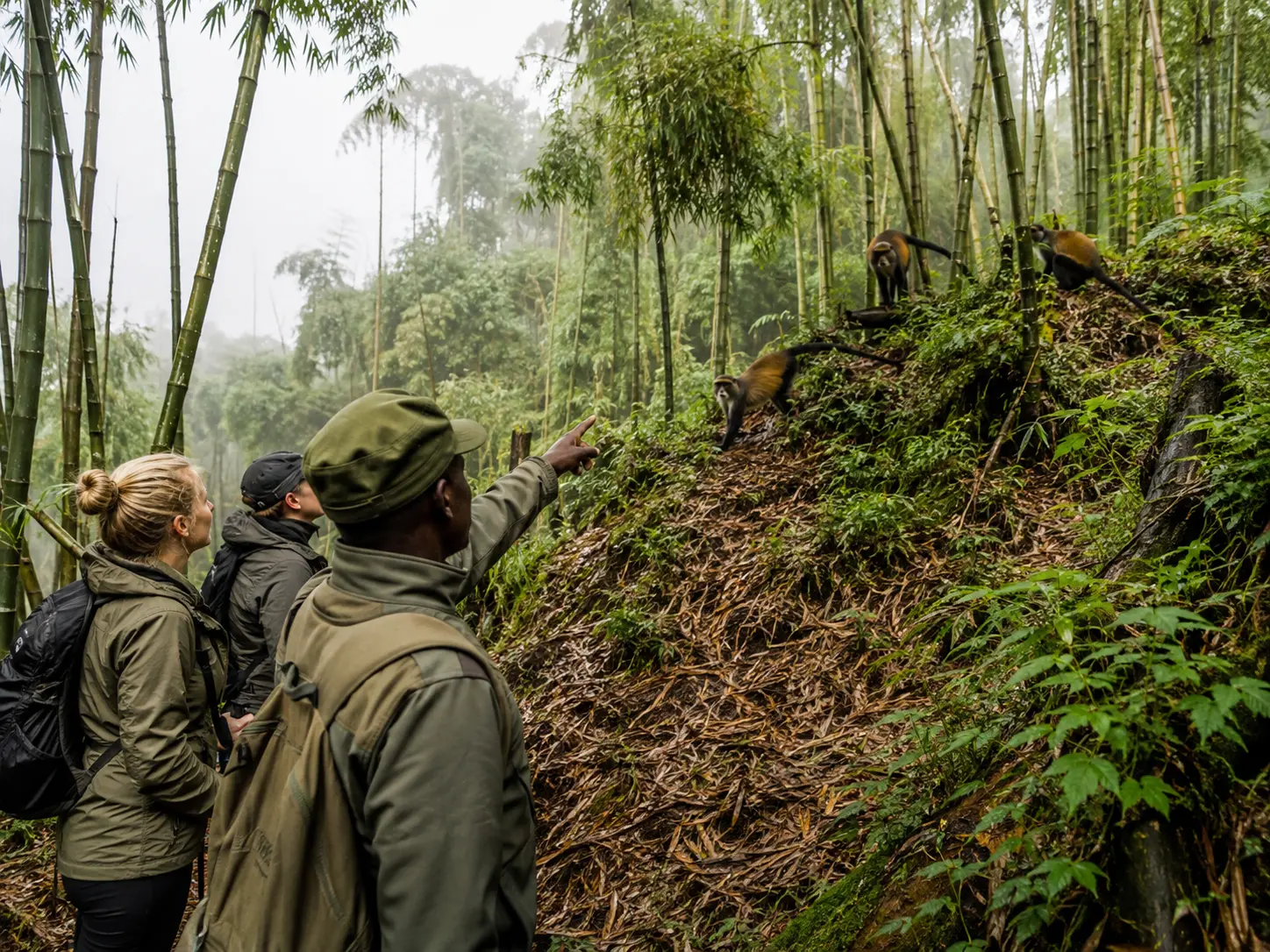
Best for: photographers, first-time visitors, families with older children, and travellers combining golden monkey tracking with gorilla trekking during the dry season.
Wet Season Golden Monkey Tracking in Rwanda
The wetter months fall mainly from March to May and October to November. These months bring more rain into the bamboo forest, and the trails can become muddy, slippery, and more physically demanding. You should expect wet ground, mist, denser vegetation, and a greater need for proper trekking gear. Good walking boots, a rain jacket, long sleeves, and a small daypack cover make a big difference.
The reward is the mood of the forest. During the rainy season, the bamboo zone feels fresh, green, and alive. There are fewer visitors, the trek feels quieter, and the mist can give the forest a dramatic atmosphere for photography. Accommodation rates are also lower in many lodges during these lower-demand months. This helps travellers who want a softer budget without losing the golden monkey experience.
Golden monkeys remain active in the wet season. In fact, when bamboo shoots are abundant, the troops can be lively and busy feeding. The challenge is not finding beauty, but moving through wetter ground and accepting that visibility can change quickly inside the forest. For travellers who do not mind mud and rain, this season gives a more intimate and less crowded encounter.
Best for: experienced hikers, budget-conscious travellers, repeat safari visitors, and travellers who prefer quieter forest experiences.
Bamboo Shooting Season
A very good time to watch golden monkeys feeding is during the bamboo shooting season from February to April. This is when fresh, tender bamboo shoots emerge, and golden monkeys become very active around feeding areas. Since bamboo shoots are one of their favourite foods, you can see more feeding behaviour, quick movements through the stems, and strong social activity within the troop.
February sits close to the drier season, while March and April move into wetter conditions. This period gives a mixed experience. You get strong monkey activity, but you also need to be ready for rain, mud, and changing forest light. For keen photographers and primate lovers, this can be one of the most interesting times to track golden monkeys in Rwanda.
What to Carry for Golden Monkey Tracking in Rwanda
- Waterproof hiking boots with ankle support
- Long trousers or quick-dry trekking pants
- Long-sleeved shirt
- Waterproof rain jacket
- Gaiters
- Camera with extra batteries and memory cards
- Drinking water and light snacks
- Walking stick or trekking pole
- Hat and light layers
- Insect repellent and small personal kit