
Queen Elizabeth National Park is Uganda’s most visited safari park and the country’s second largest national park, covering about 1,978 sq km in western Uganda. It sits at the base of the Rift Valley, between Lake George and Lake Edward, and stretches across Kasese, Kamwenge, Rubirizi and Rukungiri. On the western side, the park reaches toward the border with the Democratic Republic of Congo, making it part of a much wider wildlife landscape.
This park has held an important place in Uganda’s safari story for many years. It was first gazetted in 1952 as Kazinga National Park, then later renamed in honour of the visit of Queen Elizabeth II. That is the name travellers know today, and it belongs to one of the most rewarding safari areas in East Africa.
What makes Queen Elizabeth National Park special is how quickly the land changes as you move through it. One moment you are looking across open savannah plains. Soon after, you are near crater lakes, wetlands, forest, or the famous Kazinga Channel, the natural waterway that connects Lake Edward to Lake George. Behind the park, the Rwenzori Mountains rise in the distance, giving many parts of the park that strong western Uganda feeling.
Around Queen Elizabeth, the land is also connected to other important protected areas. Kyambura Game Reserve, Kigezi Game Reserve, Maramagambo Forest, Kibale National Park to the northeast, and Virunga National Park across the border in Congo all sit within this wider region. Around Lake Edward, these landscapes create one of the richest safari zones in this part of Africa.
Wildlife in Queen Elizabeth National Park
Queen Elizabeth National Park is one of Uganda’s most rewarding wildlife parks because it gives you a real mix of big game, primates, birds, water wildlife and wide Rift Valley scenery in one journey. One drive can take you across open plains where Uganda kob graze in the grass, and the next moment you are near the water watching hippos, buffaloes and Nile crocodiles gathering along the Kazinga Channel.
Big Game and Safari Animals in Queen Elizabeth National Park
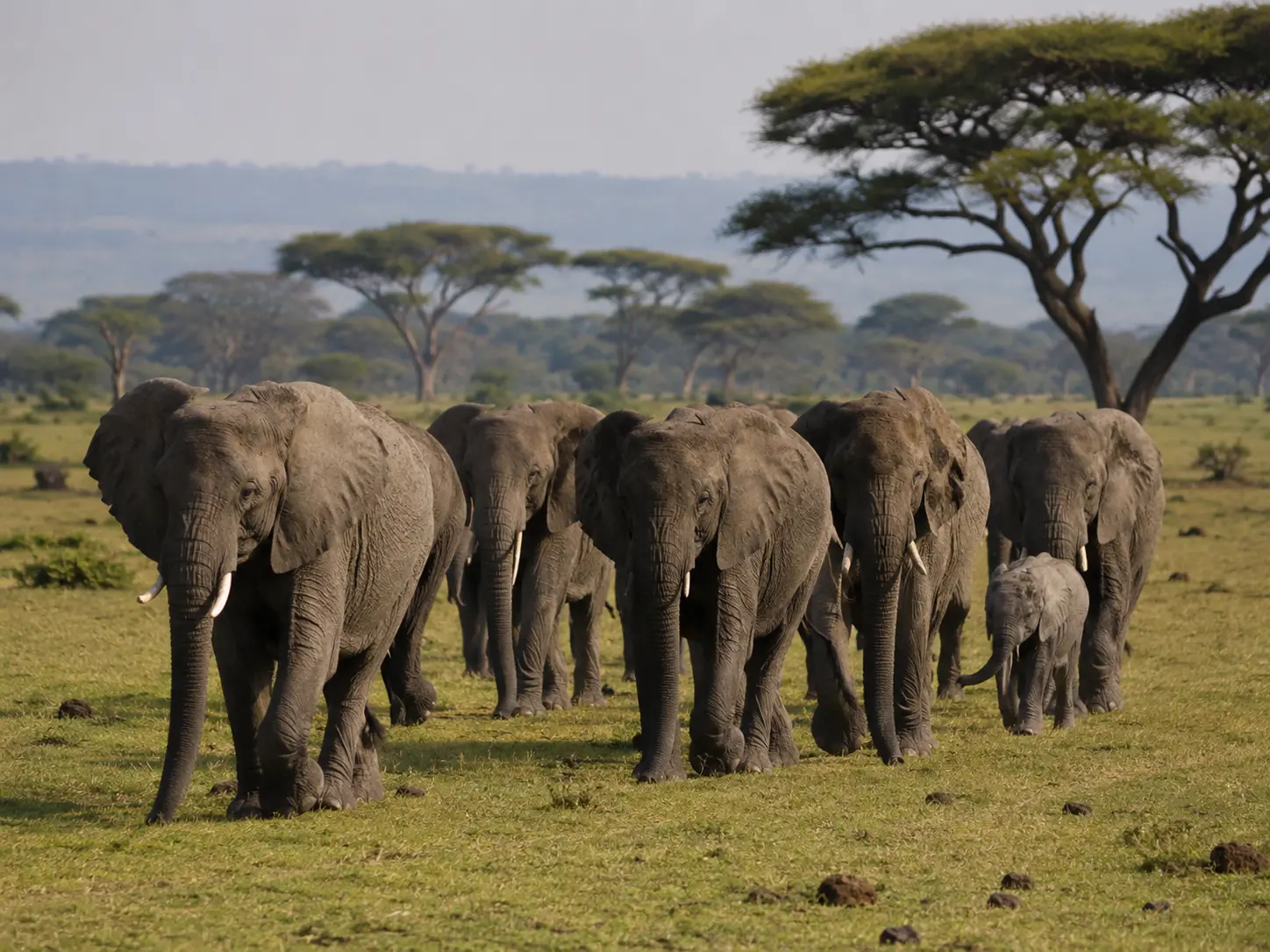
For big game, the park is known for the Big Four, including lions, elephants, buffaloes and leopards. You also have good chances of seeing Uganda kob, topi, waterbuck, warthogs, giant forest hogs, spotted hyenas, hippos, Nile crocodiles and chimpanzees. This variety is what makes Queen Elizabeth feel like a complete Uganda safari park. You are not coming here for one animal only. You are coming for a full wildlife experience spread across plains, wetlands, forests, crater lakes and channels.
Birdlife and Wetland Wildlife Around Kazinga Channel
Queen Elizabeth National Park has about 95 mammal species and more than 600 bird species, making it one of the richest birding areas in Uganda. Even travellers who are not serious birders quickly notice the birdlife here, from waterbirds along the Kazinga Channel to forest birds, wetland species and open-plains birds around the park. The mix of lakes, swamps, savannah, forest edges and crater country keeps the sightings changing throughout the day.
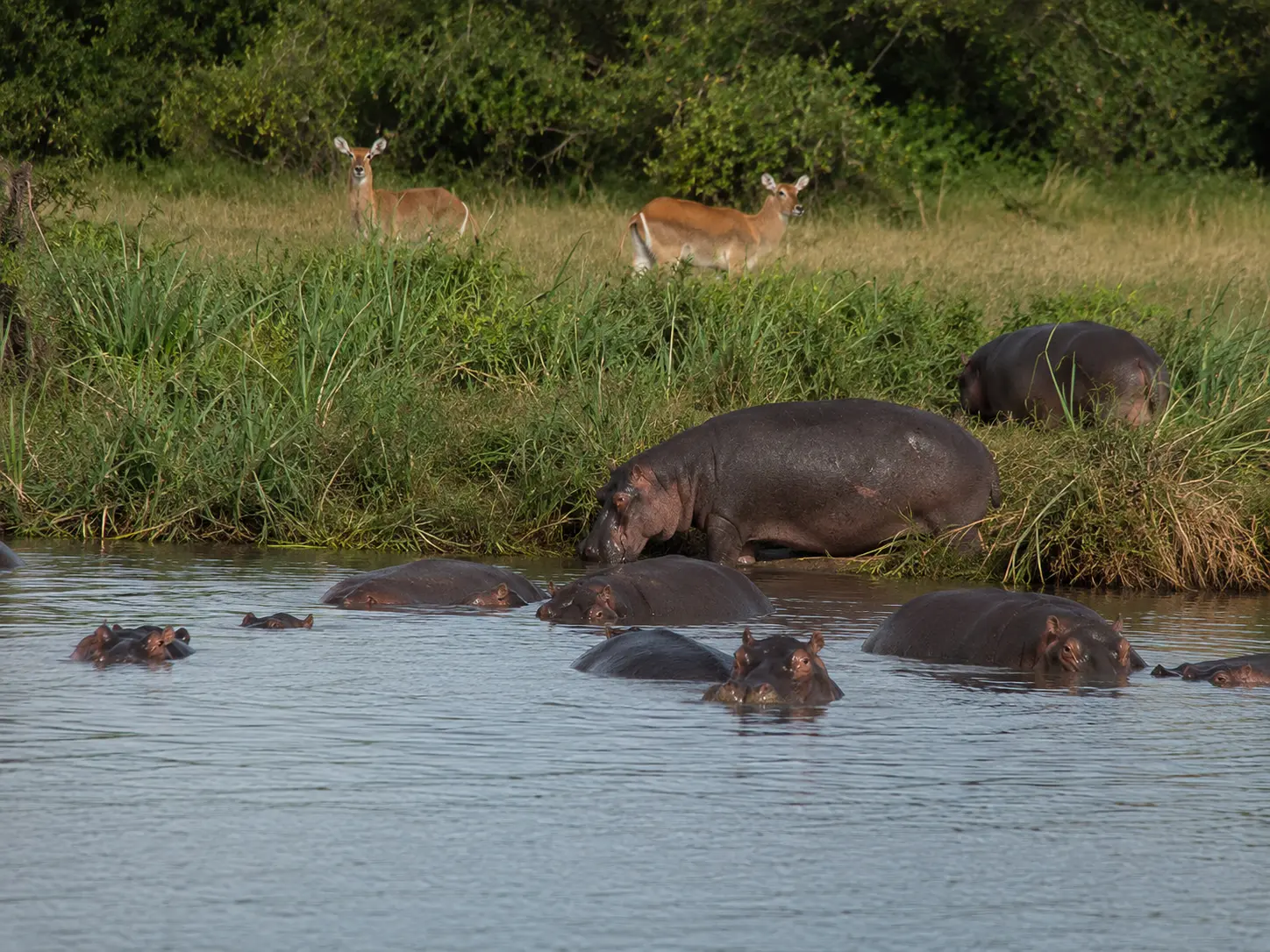
The Kazinga Channel is one of the best places in the park for close wildlife viewing. Hippos pack the water, crocodiles rest along the banks, buffaloes come down to drink, and elephants move between the channel, woodland and open grassland. A boat safari here gives you a slower and closer look at the animals than a game drive, with excellent chances for photography and bird watching.
Tree-Climbing Lions in the Ishasha Sector
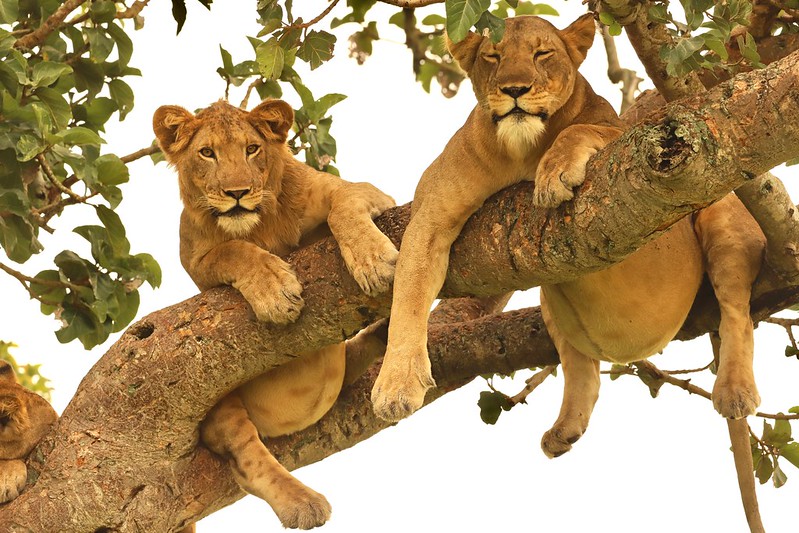
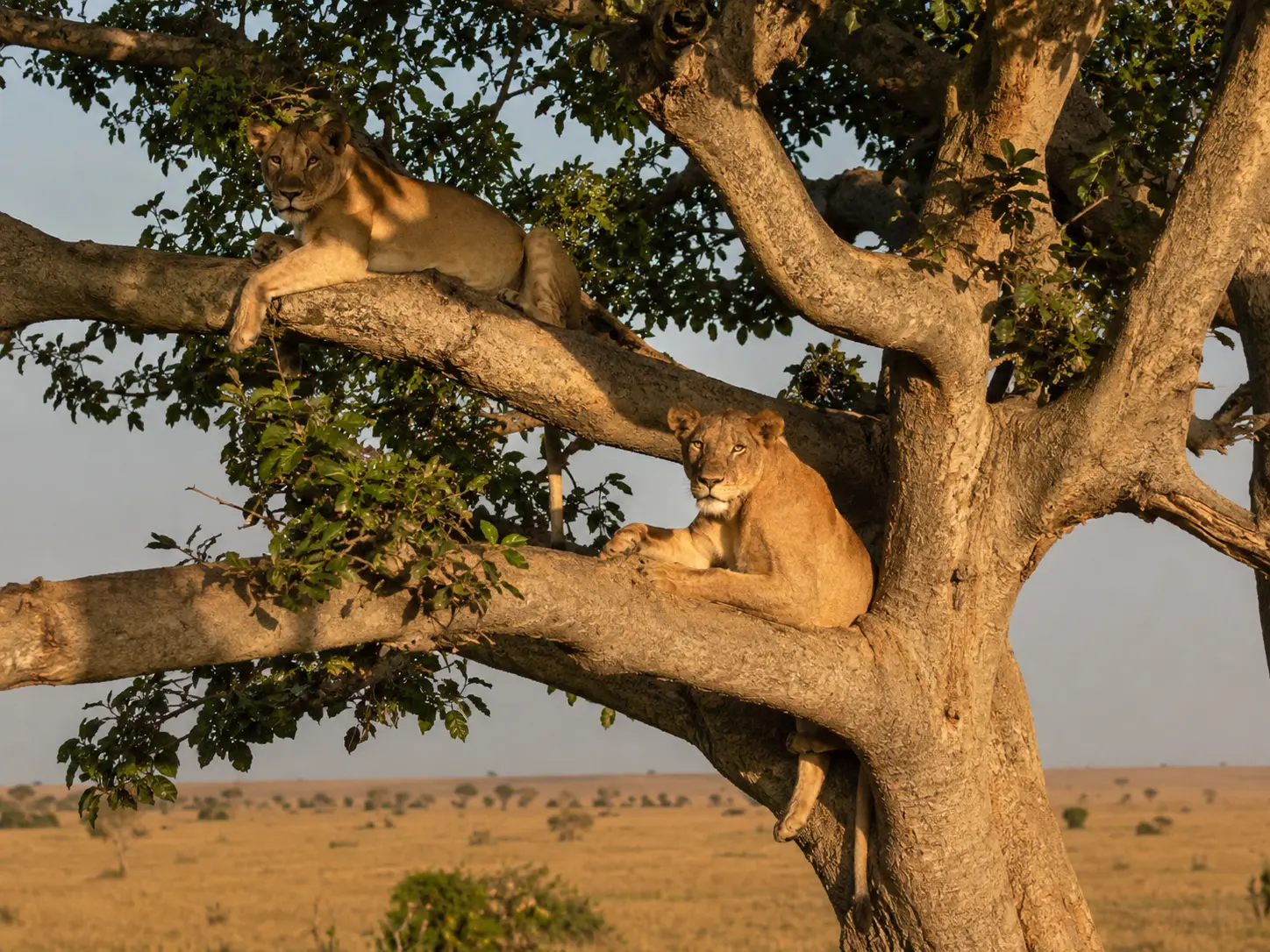
In the southern Ishasha sector, Queen Elizabeth becomes famous for its tree-climbing lions. These lions are known to rest in fig trees during the heat of the day, stretched across the branches while the plains lie below them. Some males in this area also carry dark manes, giving Ishasha a strong place in Uganda’s safari image. This sector feels quieter and more remote than the busier northern routes, making it a good choice for travellers who want a deeper game drive experience.
What makes wildlife viewing in Queen Elizabeth National Park special is the movement between habitats. You can start the morning around Kasenyi looking for lions and Uganda kob, take a boat on the Kazinga Channel in the afternoon, then continue towards Ishasha or Kyambura for a completely different feel. Few parks in Uganda give you that much variety without travelling far between regions.
Things to Do in Queen Elizabeth National Park
Game Drives in Kasenyi and the Ishasha Sector
Game drives are the main way to explore Queen Elizabeth National Park. The Kasenyi plains are one of the best areas for classic safari drives, especially if you want open grassland, Uganda kob, buffaloes, elephants, warthogs, hippos, waterbucks, leopards, hyenas and lions.
Early morning is a beautiful time to be out here. The air is still cool, the light is soft, and the plains slowly wake up around you. You may see Uganda kob standing in the grass, elephants moving quietly in the distance, buffaloes feeding together, or lions resting after a night of hunting. Late afternoon drives are also rewarding because the heat begins to drop and animals start moving again.
The Ishasha sector gives you a different safari feeling. It sits in the southern part of Queen Elizabeth National Park and is famous for tree-climbing lions. These lions are known to rest in fig trees during the heat of the day, giving travellers one of the most memorable predator sightings in Uganda.
Ishasha is quieter than the busier northern routes. The plains feel more open, the vehicles are fewer, and the whole drive feels slower and deeper. It is a good area for travellers who want more time around lion country, open landscapes and a quieter game drive experience.
Kazinga Channel Boat Cruise from Mweya Peninsula
A boat cruise on the Kazinga Channel is one of the best activities in Queen Elizabeth National Park. The channel sits near the Mweya Peninsula and connects Lake Edward with Lake George. This waterway is full of life because many animals come here to drink, cool off, and feed along the banks.
From the boat, you can see hippos in large numbers, Nile crocodiles resting near the water, buffaloes standing along the shoreline, elephants coming down to drink, and many waterbirds feeding in the shallows. The boat moves slowly, so you have time to watch the animals properly instead of rushing past them.
This activity is good if you want close wildlife viewing without spending the whole day in a safari vehicle. It is also excellent for photography. You can sit calmly on the boat, follow the movement of animals along the banks, and get close views of hippos, crocodiles, elephants and birds from a safe position.
During the dry season, the Kazinga Channel becomes even more important because more animals move toward the water. This makes the boat cruise one of the most rewarding ways to experience the park.
Chimpanzee Tracking in Kyambura Gorge
Chimpanzee tracking in Queen Elizabeth National Park is done in Kyambura Gorge. This deep forested valley sits on the eastern side of the park and gives you a completely different experience from the open savannah.
One moment you are looking across plains and crater country. The next moment, you are walking down into a cool forest gorge where the air changes, the sounds change, and the whole feeling becomes quieter. This is where you look for chimpanzees, red-tailed monkeys, vervet monkeys, baboons and black-and-white colobus monkeys.
Chimpanzee tracking permits are booked through the Uganda Wildlife Authority or with help from your safari operator. The activity can take about 1 to 3 hours, depending on where the chimpanzees are located. Once you find them, visitors are given around one hour with the chimpanzees.
A distance of about 8 to 10 metres is kept between visitors and chimpanzees for safety and conservation. This gives the chimpanzees space while still allowing you to enjoy one of the most exciting primate experiences in the park.
Bird Watching in Queen Elizabeth National Park
Queen Elizabeth National Park is one of Uganda’s top bird watching destinations, with more than 600 bird species recorded across its wetlands, forests, crater lakes, open plains and the Kazinga Channel.
Birding is rewarding around the Kazinga Channel, Maramagambo Forest, the Kasenyi plains, the Lake Katwe area and other wetland edges. Even if you are not a serious birder, you will notice the birds here because they are everywhere, on the water, in the grass, around the trees and along the shores.
You can look out for the African fish eagle, shoebill, herons, kingfishers, pelicans, cormorants and many other wetland birds. The Kazinga Channel is especially good because the boat cruise brings you close to the waterbirds without disturbing them.
The wet season can be good for birding because migratory species arrive and the park becomes greener. But bird watching can still be added to your Queen Elizabeth safari at any time of year.
Guided Nature Walks in Maramagambo Forest
Guided nature walks give you a slower way to experience Queen Elizabeth National Park. After long game drives, it feels good to step out with a ranger or guide and notice the smaller details around you.
Maramagambo Forest is one of the key places for forest walks in the park. The trails are shaded and quieter, with primates, forest birds and a cooler atmosphere than the open plains. Here, the safari is not only about big animals. It is about tracks, bird calls, forest sounds, insects, trees, plants and the feeling of walking through a different habitat.
Nature walks are good for travellers who want to break up vehicle-based safari days. They also help you understand how varied Queen Elizabeth National Park is. In one park, you have savannah grassland, swamp vegetation, tropical forest, crater lakes, volcanic cones and deep craters.
Lake Katwe Salt Works and Cultural Visits
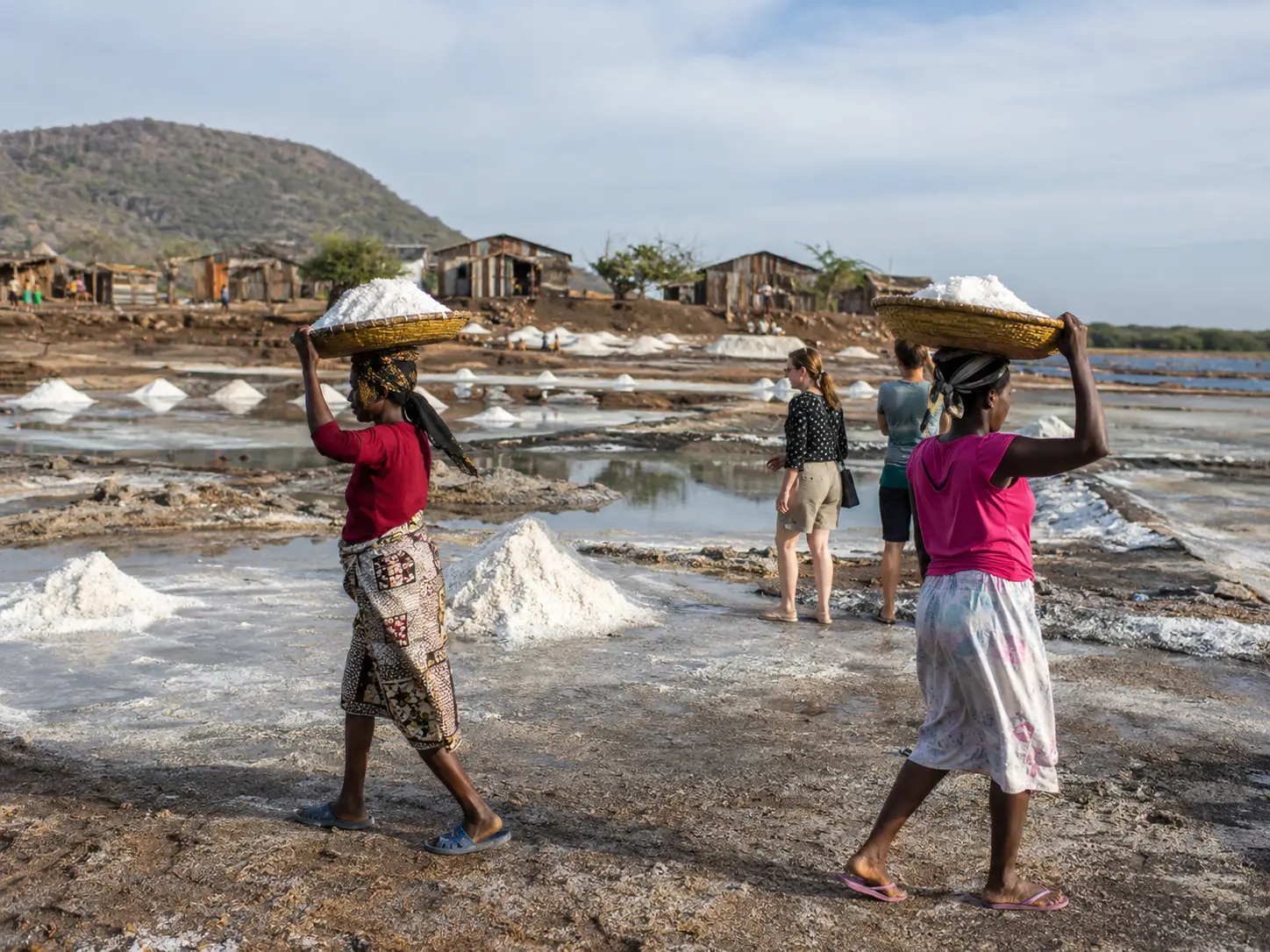
A visit to Lake Katwe adds a strong cultural side to your Queen Elizabeth safari. Around the lake, local people mine salt using traditional methods, and visitors can learn how salt has supported communities in this part of western Uganda for generations.
This is not a big wildlife activity, but it gives you something very important. It helps you understand the people who live around the park. You see the work, the salt pans, the local knowledge and the daily life that continues beside one of Uganda’s most visited safari areas.
Cultural visits around Lake Katwe can also include local songs, dances and time with communities near the park. The area is connected with the Banyaruguru and Toro communities, giving travellers a better understanding of the human side of Queen Elizabeth National Park. Lake Katwe works well as a short activity between game drives, boat cruises or crater route visits.
Crater Lakes, Photo Safaris and the Queen’s Pavilion
Queen Elizabeth National Park is also very strong for scenery and photography. The crater areas give wide views over volcanic landscapes, crater lakes, open plains and the Rwenzori backdrop.
This is where you slow down and take in the shape of the land. The views feel wide, open and dramatic, especially in the morning or late afternoon when the light is softer. The crater side near the Equator area is one of the best places for photo safaris because the landscape opens beautifully from different viewpoints.
The Queen’s Pavilion is another small but interesting stop. It was first set up in 1954 and later renovated in 2007. It gives visitors a place to pause while exploring the park’s scenic routes. This part of the park is good for travellers who enjoy history, landscape views and photography, not only wildlife.
Lion Tracking, Mongoose Tracking and Hippo Census Activities
Queen Elizabeth National Park also offers special research-based activities such as lion tracking, mongoose tracking and the hippo census. These activities give you a closer look at the conservation work taking place inside the park.
Lion tracking is a strong option if you are interested in predators and want to understand how lions are monitored. Instead of only looking for lions during a normal game drive, you get a deeper look at how researchers follow and study them.
Mongoose tracking and hippo census experiences add another layer to the safari. They help travellers see that wildlife protection is not only about sightings. It is also about research, monitoring and understanding how animals live in the park. These activities are good for travellers who want something more detailed than a standard game drive.
Balloon Rides Over Queen Elizabeth National Park
Balloon rides over Queen Elizabeth National Park are offered at an extra cost and start very early in the morning. They depend on weather conditions, so departures can be cancelled if the weather is not suitable.
When the flight operates, it gives you a very different view of the park. From above, you can see the plains, crater scenery, vegetation, wildlife areas and the wider shape of Queen Elizabeth National Park in a way you cannot see from the ground.
This is a good choice for travellers who want a special safari moment. It gives you that quiet early morning feeling, the park opening below you, and a wider view of one of Uganda’s most varied safari landscapes.
Best Time to Visit Queen Elizabeth National Park
Dry Season in Queen Elizabeth National Park
The dry season is the easiest time for most travellers. June to August and December to February are the strongest months for classic wildlife viewing because the safari tracks are firmer and the bush is more open. This makes game drives smoother, early starts easier, and longer drives between park areas more comfortable.
This is a good time for morning and afternoon game drives around Kasenyi, boat safaris on the Kazinga Channel, crater scenery drives, Ishasha tree-climbing lion searches, and road transfers between Mweya, Kyambura, Kasenyi, and Ishasha. The drier tracks also help when you want to cover more than one section of the park in the same safari.
The dry months also work well if your safari includes Kyambura Gorge, Kalinzu Forest, or Maramagambo Forest. Forest walks and chimpanzee tracking feel more comfortable because the trails are less slippery, access roads are easier to use, and early departures are smoother.
This is the season we recommend for first-time safari travellers who want the easiest road conditions and the best balance of wildlife, scenery, boat cruises, and forest activities.
Rainy Season and Road Conditions in Queen Elizabeth
The rainy season changes the feeling of Queen Elizabeth National Park. The wetter months fall around March to May and September to November, with March, April, November, and early December bringing some of the muddiest road conditions. After heavy rain, some tracks become slippery, remote routes take longer, and safari vehicles need more care when moving between Kasenyi, Mweya, Ishasha, and Kyambura.
The park remains open, and the scenery becomes green and fresh. The crater areas look beautiful, the plains soften, and the light can be lovely for photography. But game viewing needs more patience because tall grass and thick vegetation can hide animals. A drive that feels simple in the dry season can become slower after rain, mainly on remote tracks and long sector transfers.
For first-time travellers, the dry season is the easier choice. For photographers, birdwatchers, and travellers who enjoy quieter routes, the wet season still has its rewards. The key is to keep the itinerary flexible, use the right vehicle, and avoid rushing long movements between park sectors.
Where to Stay in Queen Elizabeth National Park
| Lodge name | Location | Activities |
|---|---|---|
| Mweya Safari Lodge | Mweya Peninsula, inside Queen Elizabeth National Park | Kazinga Channel boat cruise, game drives, birdwatching, crater views, wildlife photography |
| Students’ Hostel at Mweya | Mweya sector, near park headquarters | Budget stay, Kazinga Channel access, game drives, birdwatching |
| Queen Elizabeth Bush Lodge | Near Kazinga Channel, outside the main park area | Boat safaris, game drives, birdwatching, relaxed lodge stay |
| Jacana Safari Lodge | Forested area near Lake Nyamusingire | Nature walks, birdwatching, forest scenery, quiet wildlife viewing |
| Katara Lodge | Near the Mbarara to Kasese road, outside the park | Crater views, game drives, birdwatching, sunset views over the park |
| Kingfisher Resort | Kichwamba Escarpment area | Rift Valley views, game drives, birdwatching, cultural visits |
| Kyambura Gorge Lodge | Near Kyambura Gorge | Chimpanzee tracking, gorge walks, game drives, birdwatching |
| Ishasha Wilderness Camp | Southern Ishasha sector | Tree-climbing lion searches, game drives, birdwatching, wilderness stays |
| Park View Safari Lodge | Near Queen Elizabeth National Park | Game drives, boat cruise access, birdwatching, community visits |
| Marafiki Safari Lodge | Outside the park, near the Queen Elizabeth safari route | Game drives, Kazinga Channel trips, birdwatching, crater scenery |
| Elephant Plains Lodge | Outside the park with wide views over Queen Elizabeth | Game drives, wildlife viewing, birdwatching, scenic lodge stay |