
Kibale Forest National Park sits in western Uganda, about 26 km southeast of Fort Portal. The park spreads through Kabarole, Kamwenge, Kyenjojo, and Kasese districts, covering about 795 sq km of thick tropical forest, cool highland air, and some of the best chimpanzee tracking in East Africa.
This is one of those forests you do not just visit. You feel it as soon as you enter. The air becomes cooler, the light softens under the canopy, and the sounds of the forest begin to rise around you. Somewhere ahead, chimpanzees call from the trees, branches move above the trail, and your guide slows the walk because every sound in Kibale can mean something.
Kibale was first gazetted in 1932 and later became a national park in 1993. Before that, parts of the forest had been managed as a logged reserve, but today it protects one of Uganda’s richest rainforest habitats. For travellers, this means you are walking through a forest with real depth, history, wildlife, and strong conservation value.
Why Kibale Is Called the Primate Capital of East Africa
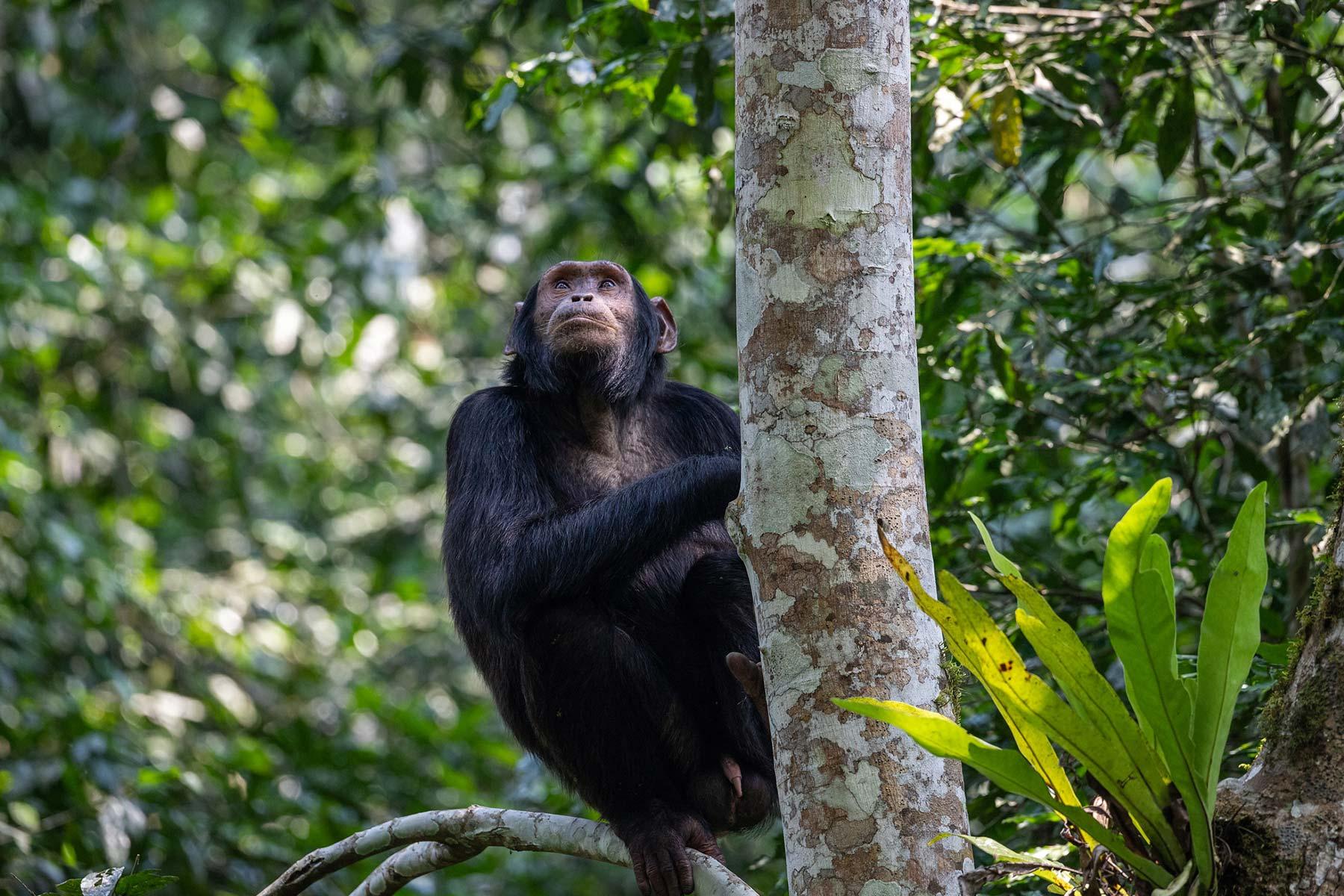
Kibale is widely known as the primate capital of East Africa, and once you step into the forest, that name feels right. The park protects 13 primate species, including habituated chimpanzees, red colobus monkeys, black-and-white colobus, L’Hoest’s monkeys, blue monkeys, Uganda mangabeys, and grey-cheeked mangabeys.
Uganda has around 4,950 chimpanzees, and Kibale holds about 1,450 to 1,500 of them. That makes Kibale one of the best places in Uganda to see chimpanzees in the wild. For many travellers, this is the main reason to come here.
Standard chimpanzee tracking gives you one hour with the chimpanzees after you find them. That hour can feel very powerful. You watch them feeding, resting, calling, grooming, moving through the trees, or coming down close to the forest floor. If you want more time in the forest, the Chimpanzee Habituation Experience gives you a deeper day with a semi-habituated chimpanzee group, following their movements for longer and seeing more of their natural behaviour.
The Forest, Mountains, Wildlife Corridor, and Tooro Culture
The setting around Kibale adds a lot to the safari. To the west, the Rwenzori Mountains, known as the Mountains of the Moon, rise above the landscape. To the south, the grasslands and lakes of Queen Elizabeth National Park stretch out into classic safari country.
This connection creates a 180 km wildlife corridor between Kibale and Queen Elizabeth National Park. It allows animals such as forest elephants to move between the two parks, showing how important this forest is beyond chimpanzee tracking alone.
The forest has an annual temperature range of about 14°C to 27°C. The northern sector reaches around 1,590 m above sea level and receives about 1,700 mm of rainfall each year. That is why Kibale stays green, cool, rich, and alive through much of the year.
Around Fort Portal, the wider Tooro region adds another layer to the journey. This is home to the Batoro people and the Tooro Kingdom, giving travellers a cultural experience before or after a Kibale forest safari. You come for the chimpanzees, but the forest, the people, the mountains, and the wider landscape make Kibale feel much bigger than one activity.
Things to Do in Kibale Forest National Park
Chimpanzee Trekking in Kibale Forest
Chimpanzee trekking is the main activity in Kibale Forest National Park, and it is the reason many travellers come to this part of western Uganda. The chimpanzee tracking programme has been running since 1993, giving visitors one of the best chances in East Africa to see wild chimpanzees in their natural forest home.
Treks are done in the morning and afternoon, with common tracking times around 8:00 am and 2:00 pm. Before you enter the forest, you first meet the ranger guide for a briefing. This helps you understand the rules, the walking conditions, and how to behave when you finally reach the chimpanzees.
The tracking team normally moves ahead to find where the chimpanzees nested the previous night. That gives your ranger a better idea of where to start, but the forest is still wild. Chimpanzees keep moving. Some days they are closer. Other days you walk deeper, listening to their calls, watching fresh signs, and following the sound of the forest.
You need to come ready for a real forest walk. Carry a rain poncho, long-sleeved shirt, long trousers, waterproof boots, binoculars, camera, and insect repellent. The trail can feel damp and heavy in some places, but the reward is worth it.
When you find the chimpanzees, the forest suddenly feels alive. You watch them feed, call, groom, climb, rest, and move through the canopy with the energy of a wild forest family. It is not just a sighting. It is one of those moments where you stand quietly and feel how powerful the rainforest is.
Chimpanzee Habituation Experience in Kibale
If you want more time with chimpanzees, the Chimpanzee Habituation Experience gives you a deeper day in the forest. This activity follows chimpanzee groups that are still getting used to human presence. The habituation process takes about 2 years before a chimpanzee family becomes ready for regular visitor tracking.
You enter the forest early in the morning with rangers and research staff, then follow a semi-habituated chimpanzee group from the time they leave their overnight nests. This is a longer and more involved experience than standard chimpanzee trekking.
The beauty of this activity is that you see more of the chimpanzees’ day. You watch them wake, feed, move, hunt, patrol, rest, care for young ones, communicate, and travel through the forest. You begin to understand their behaviour, their movement, and the way the whole group stays connected.
This is a strong choice for travellers who do not want a quick forest visit. It suits people who are comfortable spending longer hours in the rainforest and want to understand chimpanzees more deeply.
Bird Watching in Kibale Forest
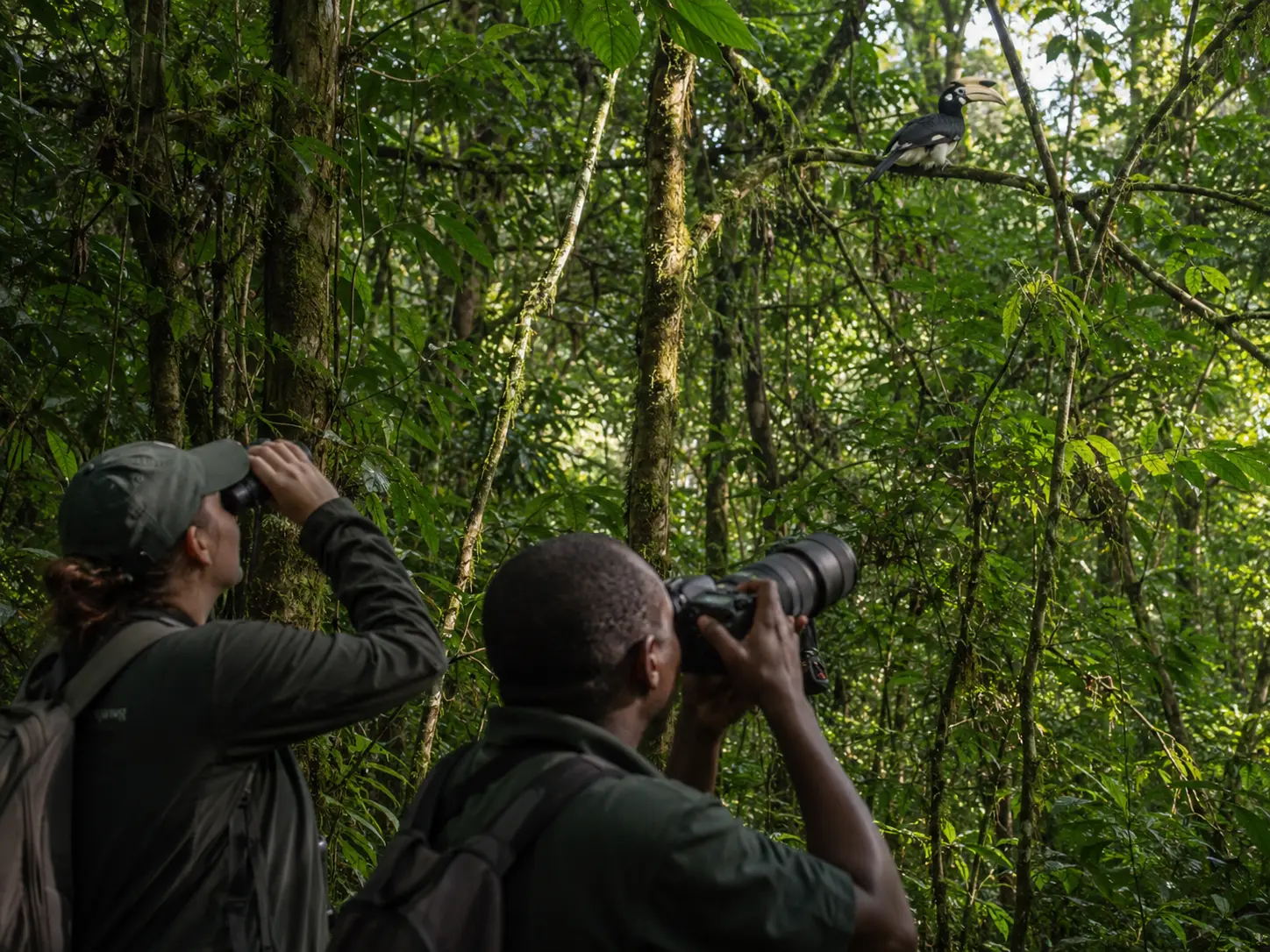
Bird watching in Kibale Forest is excellent, and early morning is the best time to begin. Bird walks start around 6:30 am, so it is better to arrange your walk in advance because rangers need to prepare for the activity.
Kibale is rich in forest birds and Albertine Rift species. For serious birders, the Green-breasted Pitta is one of the most wanted birds in the forest. Finding it takes patience, but this is what makes birding in Kibale exciting. You walk slowly, listen carefully, and let the forest reveal itself one call at a time.
Other birds to look for include Grey-throated Flycatcher, Grey-winged Robin, Crested Flycatcher, Blue-shouldered Robin-chat, Yellow-spotted Barbet, Black-billed Turaco, White-naped Pigeon, Red-chested Flufftail, White-collared Oliveback, White-bellied Crested Flycatcher, Masked Apalis, Nahan’s Francolin, Tiny Sunbird, and many more.
The forest keeps changing as you walk. Some calls come from high in the canopy. Others come from thick undergrowth or forest edges. Even when you are not seeing the bird clearly, you feel the life of the forest around you.
Nature Walks, Hiking Trails, and Night Walks
Kibale Forest also has nature walks and hiking trails for travellers who want to enjoy the park beyond chimpanzee tracking. These walks give you time to slow down, look at the smaller details, and enjoy the rainforest without rushing from one activity to another.
One of the main hiking routes is a 12 km forest trail. This trail gives you a chance to see birds, butterflies, primates, and forest mammals while moving through different parts of the forest. During the drier months, from December to February and June to September, the trails are easier to walk. During the wetter months, some sections become muddy and heavy underfoot.
Night walks show you a completely different side of Kibale. They start around 7:00 pm and last about 2.5 hours. The forest feels quieter at night, but the sounds become sharper. Rangers use torches to search for nocturnal animals such as bushbabies, hyrax, pottos, and with luck, servals and civet cats.
This is not a fast activity. You move slowly, listen carefully, and allow your eyes to adjust to the darkness. For travellers who enjoy the smaller forest moments, a night walk can be one of the most rewarding activities in Kibale Forest National Park.
Bigodi Wetland and Community Walks
A visit to Bigodi Wetland Sanctuary adds a strong community and nature experience to a Kibale safari. The wetland sits around Magombe Swamp and is managed as a community initiative to protect the local ecosystem while supporting nearby residents.
Bigodi is one of the best add-on activities after chimpanzee trekking because it brings together birding, primates, village life, and local conservation in one walk. It gives you a wider picture of the people and landscapes around Kibale Forest National Park.
The wetland is a bird haven with about 138 bird species, while Magombe Swamp hosts eight primate species. As you walk, you can see how the swamp, forest edge, gardens, and village life all connect.
The community walk can include visits to local homes, women’s projects, craft groups, schools, and places where traditional meals are prepared. You can also buy handmade crafts directly from the community, which helps support local families.
This experience is valuable because it takes you beyond the forest trail. You meet the people who live around Kibale, see how conservation supports daily life, and understand why protecting the wetland matters to both wildlife and the community.
How to Get to Kibale Forest National Park
Kibale Forest National Park sits in western Uganda, close to Fort Portal town, with Queen Elizabeth National Park to the south and Semliki National Park to the north. Most visitors reach the park by road, and this journey already begins to introduce you to the feeling of western Uganda.
As you drive closer to Kibale, the country starts to change. The road moves through busy towns, banana gardens, roadside markets, tea estates, crater lake country, and the soft green hills around Fort Portal. By the time you approach the forest zone, the air feels cooler, the views become greener, and you begin to understand why Kibale is one of Uganda’s most loved chimpanzee trekking areas.
Getting to Kibale Forest National Park by Road
The main road journey to Kibale Forest National Park starts from Kampala and follows the Kampala to Fort Portal route through Mityana and Mubende. This is a fully paved road covering about 326 kilometres, with a driving time of around 4 to 6 hours, depending on traffic, road stops, and the exact lodge or sector you are heading to.
From Fort Portal town, Kibale Forest is about 1 hour’s drive. This makes Fort Portal the main gateway town for visitors going to the park. Many travellers enjoy this final stretch because it takes you through a beautiful part of western Uganda, with tea fields, village roads, crater lake scenery, and forest edges leading you closer to Kibale.
If you are coming from Queen Elizabeth National Park, the road connects northwards towards Kasese and Fort Portal before reaching Kibale. This route works very well for safaris that combine chimpanzee trekking in Kibale with game drives, boat safaris, and wildlife viewing in Queen Elizabeth National Park.
Another longer road option goes through Mbarara, with possible stops at Lake Mburo National Park and Queen Elizabeth National Park before continuing to Kibale. This is a good route if you want a wider western Uganda safari instead of driving straight to the forest.
Travelling by road is the best choice if you want to see more of Uganda along the way. You can stop for lunch, take photos, enjoy crater lake viewpoints, pass through local trading centres, and move at a pace that allows you to feel the journey. It also gives more flexibility for lodge transfers around Kanyanchu, Bigodi, and Fort Portal.
Getting to Kibale Forest National Park by Air
There are no direct scheduled flights landing inside Kibale Forest National Park. If you want to reduce the long road journey, you can fly from Entebbe International Airport or Kajjansi Airstrip to Kasese Airstrip.
The flight takes about 1 hour. From Kasese, you continue by road for about 2 hours to the Kibale Park headquarters area, depending on your lodge location and road conditions.
Charter flights to Fort Portal can also be arranged. The flying time is about 1 hour and 30 minutes, followed by a final road transfer of about 1 hour to Kibale Forest.
Flying is a good choice if you have limited time, prefer a luxury safari pace, or want to combine Kibale with other western Uganda parks without spending a full day on the road. Even with the flight, you still get that final road approach into the green hills and forest country around Kibale, which gives the journey its real feeling.
Where to Stay in Kibale Forest National Park
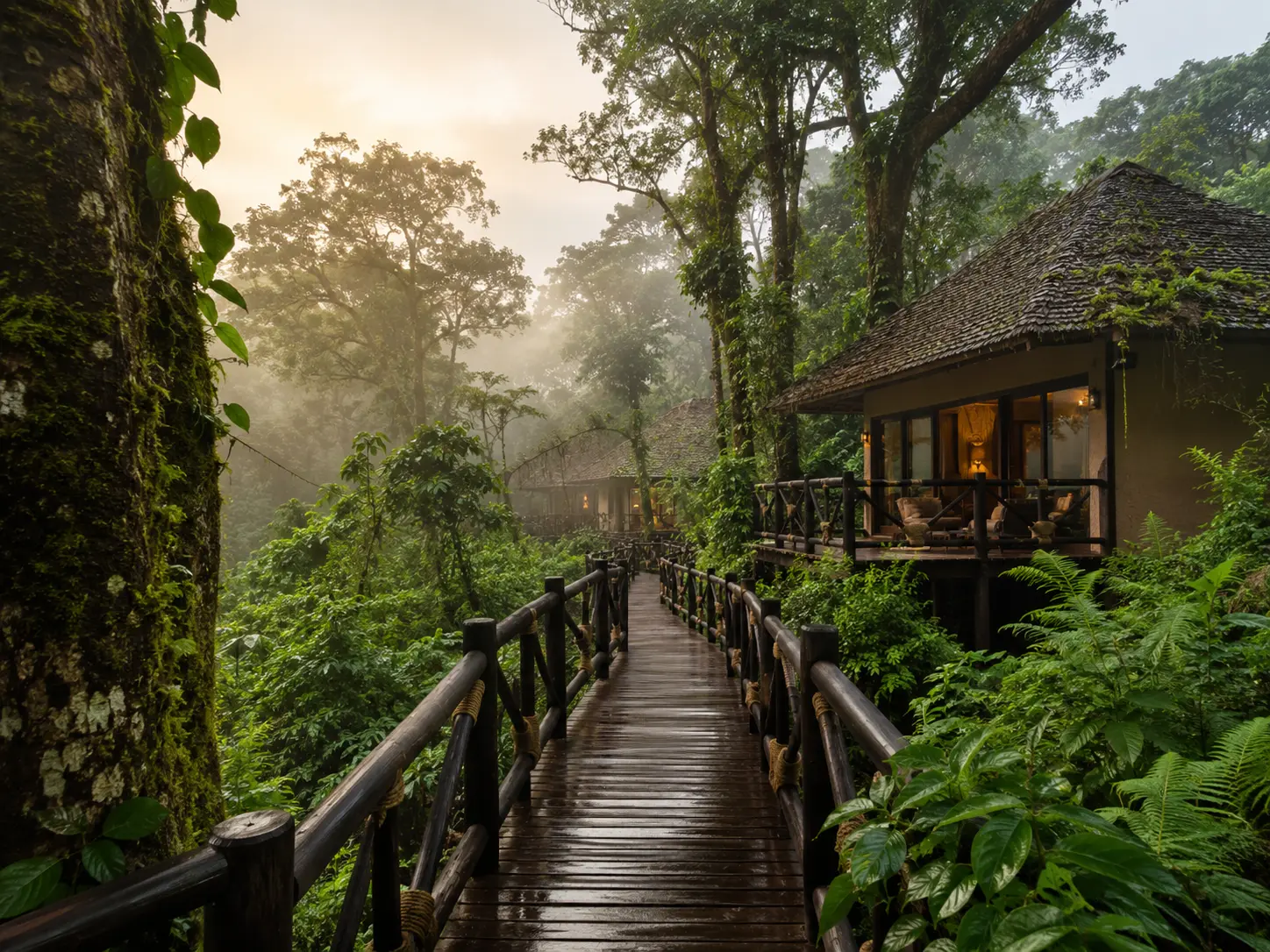
Kibale Forest National Park has a good spread of accommodation for chimpanzee trekking safaris, from forest lodges close to the Kanyanchu Visitor Centre to quiet stays around Bigodi, Nkingo, and Fort Portal. The best place to stay depends on your trekking time, budget, comfort level, and whether you want to wake up close to the forest or stay in a wider town setting with more lodge choices.
Accommodation Inside Kibale Forest and Near Kanyanchu
- Primate Lodge Kibale
- Kanyanchu River Camp
- Kibale Forest Camp
- Mantana Luxury Tented Camp
Accommodation Around Bigodi and Nkingo
- Chimpundu Lodge
- Turaco Treetops
- Tabebuia Resort & Spa
- Chimpanzee Lodge
- Bweza Lodge
- Chimps Nest
Accommodation in Fort Portal Area
- Kyaninga Lodge
- Ndali Lodge
- Mountains of the Moon Hotel
- Rwenzori View Guest House
- The Dutchess