
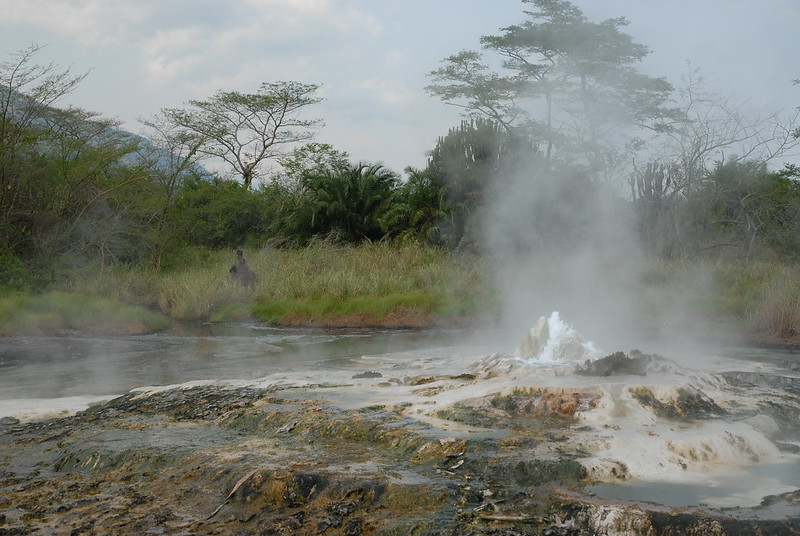
Semuliki National Park sits in Bwamba County, Bundibugyo District, in western Uganda, close to the Democratic Republic of Congo border. The Rwenzori Mountains rise on the south-eastern side, Lake Albert lies to the north, and the Semliki and Lamia rivers run along the park’s edges. This is not a typical Uganda savannah park. It protects East Africa’s only true lowland tropical rainforest, a flat to gently rolling forest sitting at about 670 to 760 metres above sea level.
The park covers about 219 sq km and has a long conservation story. It was first protected as Semuliki Forest Reserve in 1932, then became a national park in October 1993. What makes Semuliki feel different is its connection to the great Ituri Forest system, which stretches west into the Congo Basin. When you walk into this forest, you feel like you have crossed into Central Africa while still standing in Uganda. The ground is low, wet in places, thick with forest life, crossed by rivers, and watched over by the Rwenzori Mountains nearby.
Semuliki is one of Uganda’s richest forest wildlife areas. The park has 52 mammal species, 8 primate species, more than 300 butterfly species, and over 400 bird species, with bird counts reaching about 441. You can find forest elephants, buffaloes, leopards, civets, bushbabies, antelopes, baboons, chimpanzees, and other primates in this forest world. For birders, Semuliki is one of those places where you slow down and listen carefully, because the forest holds Guinea-Congo species, Albertine Rift endemics, and rare birds such as spot-breasted ibis, Hartlaub’s duck, Congo serpent eagle, chestnut-flanked goshawk, red-thighed sparrowhawk, western bronze-naped pigeon, and yellow-throated cuckoo.
The park also gives you culture and geology in one visit. The hot springs rise from a mineral-encrusted swamp, and the Mumbuga spring forms a small geyser-like fountain of about 59 cm. These mineral springs create salt licks that attract animals and shorebirds, so the area feels alive even before you enter the deeper forest trails. Around Semuliki live the Bwamba farmers along the base of the Rwenzori, the Bakonjo on the mountain slopes, the Batuku cattle keepers on the open plains, and the Batwa, traditionally forest hunter-gatherers, along the forest edge. For visitors, Semuliki is best experienced through forest walks, birdwatching, primate viewing, nature hikes, wildlife drives, cultural visits, and trips to the two hot springs.
Best Things to Do in Semuliki National Park
Semuliki National Park is not a park you rush through. This is a forest safari where you slow down, listen, walk carefully, and let the place reveal itself little by little. It feels different from Uganda’s open savannah parks. Here, the air is warmer, the forest is thicker, the bird calls are sharper, and the trails pull you deep into one of Uganda’s most unusual landscapes.
The best things to do in Semuliki National Park centre around the Sempaya Hot Springs, forest walks, birdwatching, primate viewing, the Semliki River, game drives, chimpanzee tracking, and cultural visits with the communities living around the park. You come here for the small details as much as the big moments. Steam rising from the ground. Monkeys moving in the branches. A hornbill calling from deep forest. A ranger explaining an old local story. A muddy river bending quietly through the trees.
Visit the Sempaya Hot Springs
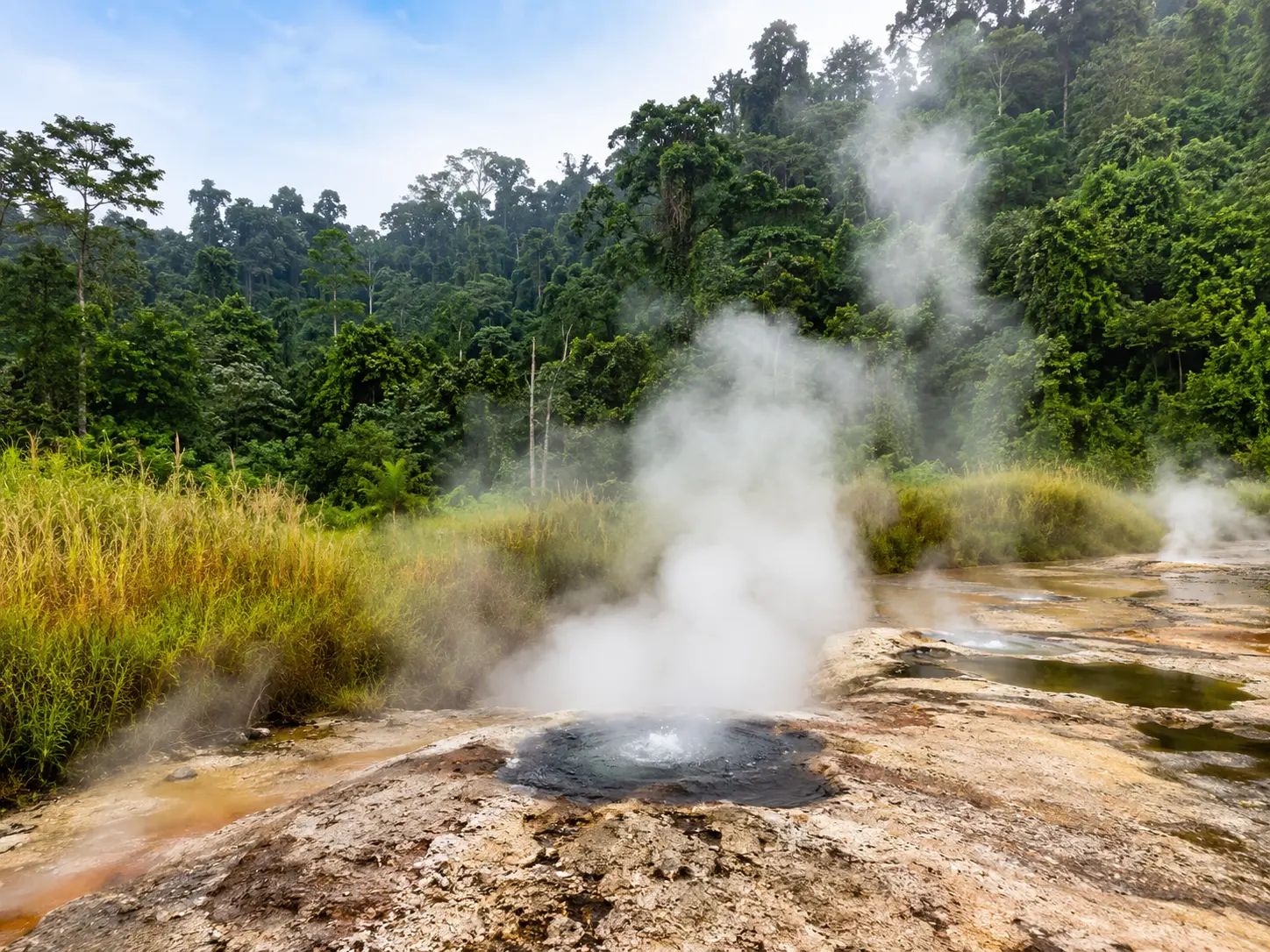
The Sempaya Hot Springs are the most famous attraction in Semuliki National Park, and they are worth giving enough time. There are two main hot springs. The female hot spring is called Nyasimbi, while the male hot spring is called Bintente, which measures about 12 metres in diameter. This is not just a stop to see boiling water. The springs carry local stories, traditional beliefs, and natural science in one place. Your ranger helps you understand the meaning of the springs to the people around Semuliki, while also explaining how the hot water rises from beneath the earth. The water is hot enough to boil eggs in about 10 minutes. You see steam lifting through the forest air, bubbling water breaking through the mineral-rich ground, and warm vapour drifting around the swampy vegetation. The setting feels wild and unusual, with thick forest, birds, butterflies, small primates, and wetland plants around the trail. A boardwalk and viewing tower help you see the springs safely without stepping too close to the boiling water. Around Sempaya, cultural dances and storytelling can also be arranged, giving the visit more feeling than a simple photo stop.
Walk Along the Semliki River
The Semliki River gives you a quieter side of Semuliki National Park. The river is about 160 kilometres long and forms part of the wider water system connected to the Nile drainage. It is dark, muddy, and slow-moving, cutting through the rift valley floor and thick forest before continuing towards Lake Albert. A walk near the Semliki River is not about rushing to see big animals. It is about reading the forest edge, watching the water, listening to birds, and looking for signs of life along the banks. You can look out for hippos and crocodiles near the water, while birds move between the riverine vegetation and the forest. This activity suits travellers who enjoy quiet nature experiences. You walk, pause, listen, and allow the forest to guide your attention. In Semuliki, that slower pace is part of the reward.
Forest Walks and Nature Trails in Semuliki
Forest walks are one of the best ways to understand Semuliki National Park. The forest here is lowland, dense, and very different from Uganda’s savannah areas. You walk under heavy vegetation, with butterflies crossing the trail, monkeys moving above you, and birds calling from places you cannot always see. Most forest walks start around Sempaya Gate and can end near the hot springs. The park has three established walking routes. The Sempaya Nature Trail is about 8 km, the Red Monkey Track is about 11 km, and the Kirumia Trail is about 13 km. These trails take you into thick vegetation, so come ready for a real forest walk. Wear proper walking shoes, long trousers, and insect protection. Carry drinking water and a light snack. The ground can be muddy, branches can be sharp, and the forest can feel humid, but that is part of what makes Semuliki feel so alive. Visitors planning to camp in the forest need to travel with their own camping equipment.
Game Drives in Semuliki National Park
Game drives in Semuliki take you through the more open savannah sections of the park. This is where the forest begins to break open and the landscape gives you a chance to look for larger mammals. Semuliki National Park has more than 52 mammal species, and game drives follow three main tracks across the savannah plains. Both day and night game drives can be arranged through the park staff. Wildlife sightings can include elephants, buffaloes, antelopes, hippos near wetter areas, and other mammals moving between the open plains and forest edges. The game drive here feels quieter than in Uganda’s busier savannah parks. You are moving through a place where forest and grassland meet, so patience matters. A good 4-wheel-drive vehicle is important, mainly during the rainy season when some sections become difficult.
Chimpanzee Tracking in Semuliki
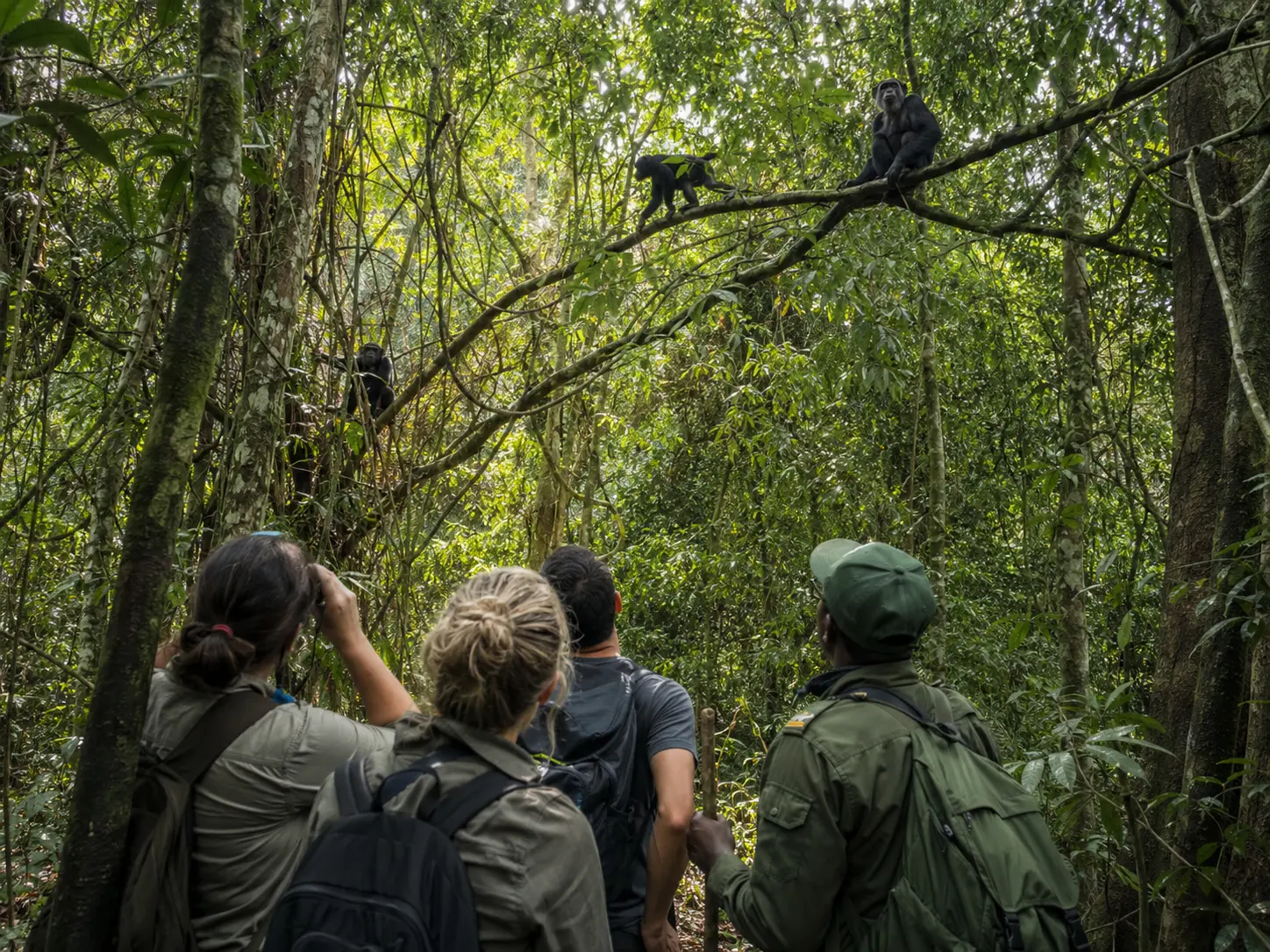
Chimpanzee tracking gives you a deeper look into the primate side of Semuliki National Park. Some chimpanzee groups were habituated through research work connected to Indiana University, and tracking is now part of the forest experience. While tracking chimpanzees, you also have a chance to look for smaller primates such as grey-cheeked mangabey, black-and-white colobus monkeys, Central African red colobus, Dent’s mona monkeys, red-tailed monkeys, and olive baboons. This activity takes you into thick forest, so dress well. Long trousers, good walking shoes, insect protection, water, and a light snack make the walk more comfortable. The forest can have stinging insects, thorns, sharp branches, and muddy ground, so it rewards guests who come prepared.
Birdwatching in Semuliki National Park
Semuliki is one of Uganda’s strongest birdwatching destinations. The park forms part of the greater Ituri Forest system stretching from the Congo Basin, giving it a Central African birdlife character that is hard to find in other parts of Uganda. Birding can be done in the forest, around Sempaya Hot Springs, along the river, and near the ranger posts. This is a place for birders who enjoy taking time. Some birds call from deep cover, some move quickly through the canopy, and others appear around forest openings, water edges, and swampy areas.
Bird species to look for include African dwarf kingfisher, African piculet, Bates’ nightjar, black dwarf hornbill, black-collared lovebird, black-wattled hornbill, African goshawk, Ayres’s hawk-eagle, Cassin’s spinetail, white-spotted flufftail, black-winged starling, brown-crowned eremomela, chestnut-breasted negrofinch, chestnut-flanked goshawk, Ituri batis, Hartlaub’s duck, red-thighed sparrowhawk, spot-breasted ibis, western bronze-naped pigeon, and white-bellied kingfisher. For serious birders, Semuliki deserves time. For casual travellers, it still adds life to every walk, because the forest is never silent.
Cultural Visits Around Semuliki National Park
The communities around Semuliki add a strong human side to the park experience. Four main groups live around the area: the Batwa, Bakonjo, Bamba, and Batuku. The Batwa are forest people with a long history as hunters and gatherers. The Bakonjo and Bamba grow crops such as rice, potatoes, cocoa, and matooke on the slopes of the Rwenzori Mountains. The Batuku live in the northern section as pastoralists. Some Batwa families were resettled near Ntandi, and cultural visits can include storytelling, dance, demonstrations, and conversations about forest life, change, and survival outside the old forest home. This activity works well after a forest walk or a visit to the Sempaya Hot Springs. It helps you understand that Semuliki is not only forest, birds, hot springs, and wildlife. It is also home to people who have lived around this landscape for generations. You leave with a better feeling for the land, the stories, and the communities that give Semuliki its deeper meaning.
Best Time to Visit Semuliki National Park
Semuliki National Park is open all year, but the easiest months for most travellers are January to March and June to September. These are the drier periods, and they make forest walks, Sempaya Hot Springs visits, birding routes, and game drives in the nearby Semliki Wildlife Reserve easier to enjoy.
Semuliki is a low-lying forest, and that makes the season very important. The park sits close to the Semuliki and Lamia rivers, so when the rains come, the ground changes quickly. A road that feels simple in the dry months can become muddy after heavy rain, and some forest paths can turn slippery. That is why we always look at the month, the road condition, and the activities you want before placing Semuliki into your safari route. This is not a park you rush through. Semuliki rewards travellers who enjoy forest sounds, quiet trails, hot springs, birds, riverine areas, and that deep Central African forest feeling you do not find in many other parts of Uganda.
Dry Season in Semuliki National Park
The dry season is the best time for easier movement through Semuliki National Park. January to March and June to September give you better conditions for visiting the Sempaya Hot Springs, walking the forest trails, exploring the Semuliki River area, and joining game drives in the nearby Semliki Wildlife Reserve.
During these months, the trails are less muddy, the roads are easier to manage, and the forest walks feel more comfortable. You can move with less pressure, stop for birds, listen to the forest, and enjoy the Sempaya area without worrying too much about slippery ground.
This is also the best time for travellers combining Semuliki with other western Uganda safari destinations. You can pair it with chimpanzee trekking in Kibale National Park, game drives and boat cruises in Queen Elizabeth National Park, wildlife viewing in Lake Mburo National Park, or gorilla trekking in Bwindi Impenetrable National Park.
For a smooth safari route, we normally place Semuliki after Kibale or before Queen Elizabeth, depending on where your journey begins. This makes the movement easier and helps you enjoy Semuliki as part of a wider western Uganda safari, not as a rushed stop in the itinerary.
Wet Season in Semuliki National Park
The wetter months fall mainly around March to May and September to December. During this time, Semuliki receives heavier rain, and some low-lying sections can become muddy or flooded as the rivers fill. The park does not close, but the safari feels different.
Drives can take longer, forest paths become slippery, and a good 4-wheel-drive vehicle becomes very important. You also need proper walking shoes, a rain jacket, and enough flexibility in your timing. In Semuliki, the rain can change the mood of the forest very quickly. One moment the trail is quiet and still, and the next moment the forest is alive with dripping leaves, bird calls, and mist hanging low between the trees.
The wet season can still be rewarding for patient travellers, mainly birdwatchers and visitors who enjoy a greener forest atmosphere. Semuliki is a strong birding destination, and the wetter months can bring more activity around the forest edge, the Sempaya area, riverine sections, and swampy zones.
This season is better when you are not in a hurry. You allow more time, move carefully, and let the forest reveal itself slowly. For the easiest conditions, choose the dry months. For a greener, quieter, more forest-filled experience, the wet season can still work well when the route is guided and planned with care.
Where to Stay in Semuliki National Park
Semliki Safari Lodge
Semliki Safari Lodge is the strongest high-end option around the Semuliki area. It sits in Semliki Wildlife Reserve near Semuliki National Park, with wide views towards Congo’s Blue Mountains. This is one of the oldest lodges in the region, and it gives you that quiet private wilderness feeling because it sits in an open area of about 500 square kilometres. The lodge is made up of luxury tents built with local materials while still giving you a comfortable safari stay. It hosts about 18 guests per day, which makes it a good choice if you want space, silence, and a more personal experience away from crowded places.
Here, the stay feels slow and peaceful. You wake up to open views, spend quiet time in the lounge or reading area, and enjoy the kind of lodge atmosphere that matches the wild character of Semliki. Facilities include a bar, restaurant, hot showers, comfortable sofas, lounge area, reading area, swimming pool, and room service for breakfast. Meals include both local and international cuisine. This lodge also works well for travellers interested in chimpanzee research. It has been connected with a chimpanzee research project in collaboration with Indiana University, giving guests a chance to learn more about chimpanzee habituation and forest research in the Semliki area.
Ntoroko Game Lodge
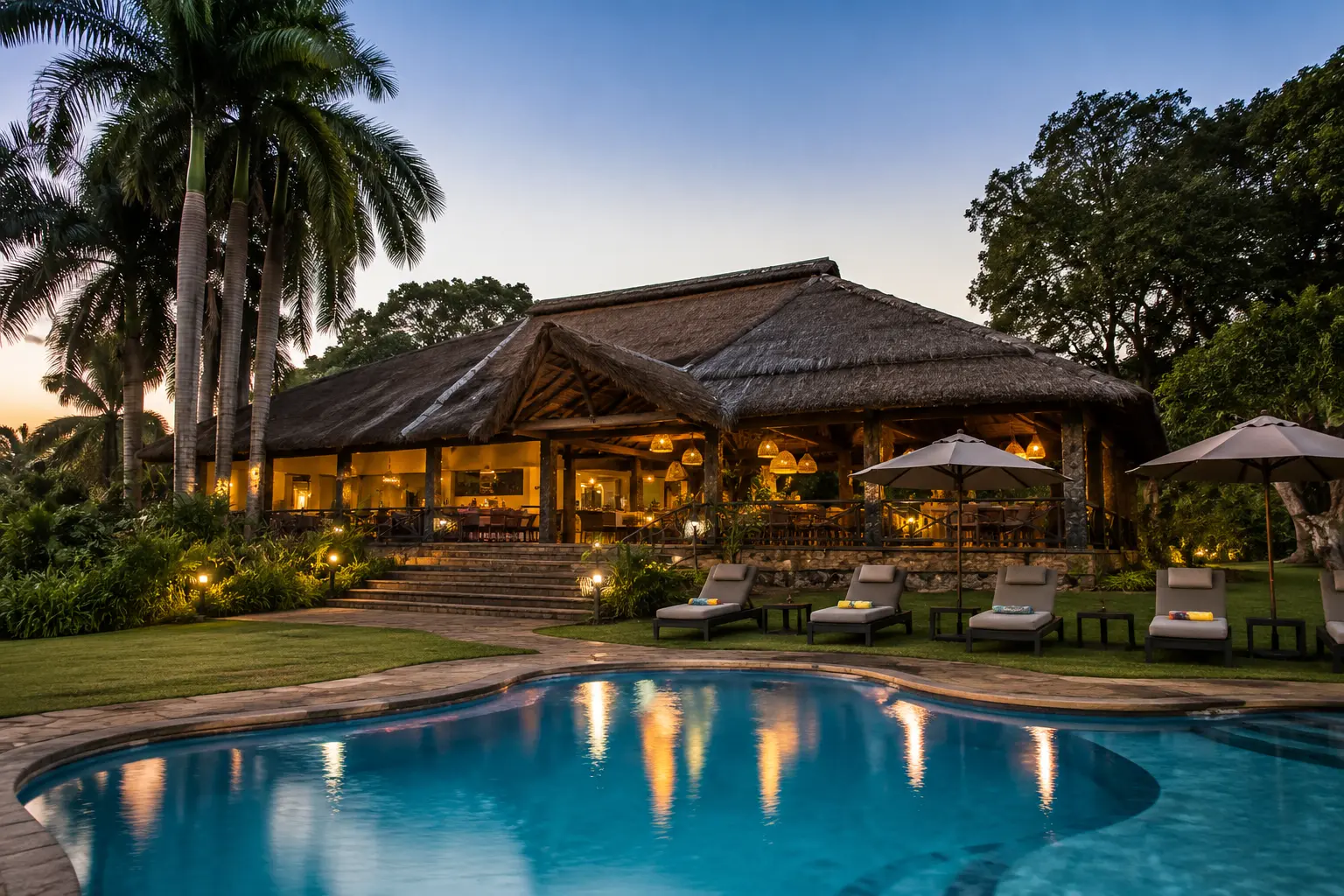
Ntoroko Game Lodge is found in Semliki Wildlife Reserve near Lake Albert. It is a good choice if you want quiet accommodation, lake views, privacy, and easy access to the reserve side of the Semuliki area. The lodge has luxury tents close to the sandy beaches of Lake Albert. This makes it a good fit for honeymoon travellers, couples, or anyone who wants a peaceful lakeside base after time in the forest. The feeling here is more open than staying near the park gate. You have the lake, the breeze, the reserve landscape, and a slower rhythm. Rooms include single and double options. They come with wooden floors, stone-style exteriors, fans, safes, hairdryers, heaters, and private balconies. If you want your Semuliki stay to feel calm and private, this is one of the better choices around Lake Albert.
Kirimia Guesthouse
Kirimia Guesthouse is a good budget option for travellers who want simple accommodation close to the forest trails. It is found about 10 km from Sempaya Gate, on the road towards Bundibugyo town in Kirimia village. This is not a luxury stay. It is for travellers who care more about location, access, and value. If your main interest is birdwatching, primate viewing, forest walks, or spending more time near the park, Kirimia gives you a simple base without pushing your budget too high. The rooms are self-contained, and meals can be served in the room on request. Its location near the Kirimia Trail and the park headquarters at Ntandi makes it useful for visitors who want to start early for forest activities. You stay here for convenience. You wake up close to the forest side of Semuliki, prepare for your walk, and move straight into the day without a long transfer from town.
UWA Bandas and Campsite at Sempaya
The UWA Bandas and campsite at Sempaya are good for travellers who want to stay close to Sempaya Hot Springs, forest walks, and the main park entry area. This is one of the simplest accommodation choices around Semuliki National Park, but the location is very useful. If your focus is the hot springs, birding, forest walks, and early access into the park, staying at Sempaya keeps you close to where the day begins. You do not come here for luxury. You come for location, low cost, and easy access. The campsite works for visitors carrying their own camping gear. The bandas give a basic overnight option for travellers who want a simple bed close to the park. It is a good choice for budget travellers, researchers, backpackers, and guests who prefer to spend more on activities than accommodation.
Hotel Vanilla
Hotel Vanilla is found in Bundibugyo town near the main market. The rooms are clean and self-contained, with showers. Meals are served in the hotel restaurant, and drinks can be ordered from the bar. This is a simple town stay. You hear the movement of Bundibugyo, see local life around the market, and remain within reach of Semuliki National Park. It works well for travellers who want a low-cost overnight stop, a meal, a shower, and an easier start before heading back to the forest or continuing with the journey.